

How to Choose a Pastel Bridal Outfit: NAQSHI Guide to Colours, Fabrics, Silhouettes & Finishing
Knowing how to choose a pastel bridal outfit means looking at more than just colour. When exploring bridal dresses in Pakistan, these same details help explain why two pastel outfits can look very different. A complete bridal look comes together through the right shade, fabric, silhouette, embellishment, dupatta treatment, finishing, and included pieces. Throughout this guide, NAQSHI’s The Vow pastel bridal collection is used as a practical reference, with real bridal examples in Golden, Pistachio, Light Aqua, Lilac, Blush Pink, Skin, and Peach. Looking at these elements together helps show how each detail can shape the overall look and finish of a pastel bridal outfit.
What Determines the Overall Look of a Pastel Bridal Outfit?
A pastel bridal outfit guide should look at how every design detail works as one complete look. The overall result changes with the softness of the shade, the way the fabric holds or falls, the shape of the outfit, and where the bridal work is placed. Even small details, such as borders, handwork, layers, and the way the dupatta sits with the main outfit, can change how light, detailed, or dressed-up the final look feels. From our work with bridal designs at NAQSHI, we find that the strongest looks come from keeping these details in balance rather than making one part of the outfit stand out too heavily.
How Colour, Fabric, Silhouette and Workmanship Work Together:
The main pastel bridal styling factors are colour, fabric, silhouette, and workmanship, and each one affects the others. A soft pastel shade can still create a rich bridal look when it is paired with a full flare, layered fabrics, embroidered panels, sequins, adda work, and worked borders. In NAQSHI’s pastel bridal designs, these details often work together to add depth without taking away the softness of the colour. For this reason, these four factors offer a useful way to judge the overall look before moving into the finer details of a bridal outfit.
Start by Choosing the Right Pastel Colour Direction:
Choosing the right shade is one of the first steps in building a balanced bridal look. Different pastel bridal colours can change how the same fabric, handwork, and silhouette appear. Softer tones such as blush pink, peach, lilac, pistachio, light aqua, skin, and golden can feel light and graceful, while embroidery, sequins, adda work, and detailed borders can give them more depth. At NAQSHI, we look at the colour together with the fabric and bridal detailing, because the shade should support the complete design rather than work on its own.
Golden, Pistachio and Light Aqua for Distinct Bridal Looks:
A soft bridal colour palette can create very different looks depending on the shade used. Instead of judging a pastel colour on its own, it helps to see how it works with the fabric, bridal work, and overall shape of the outfit.
Shamira — Golden:
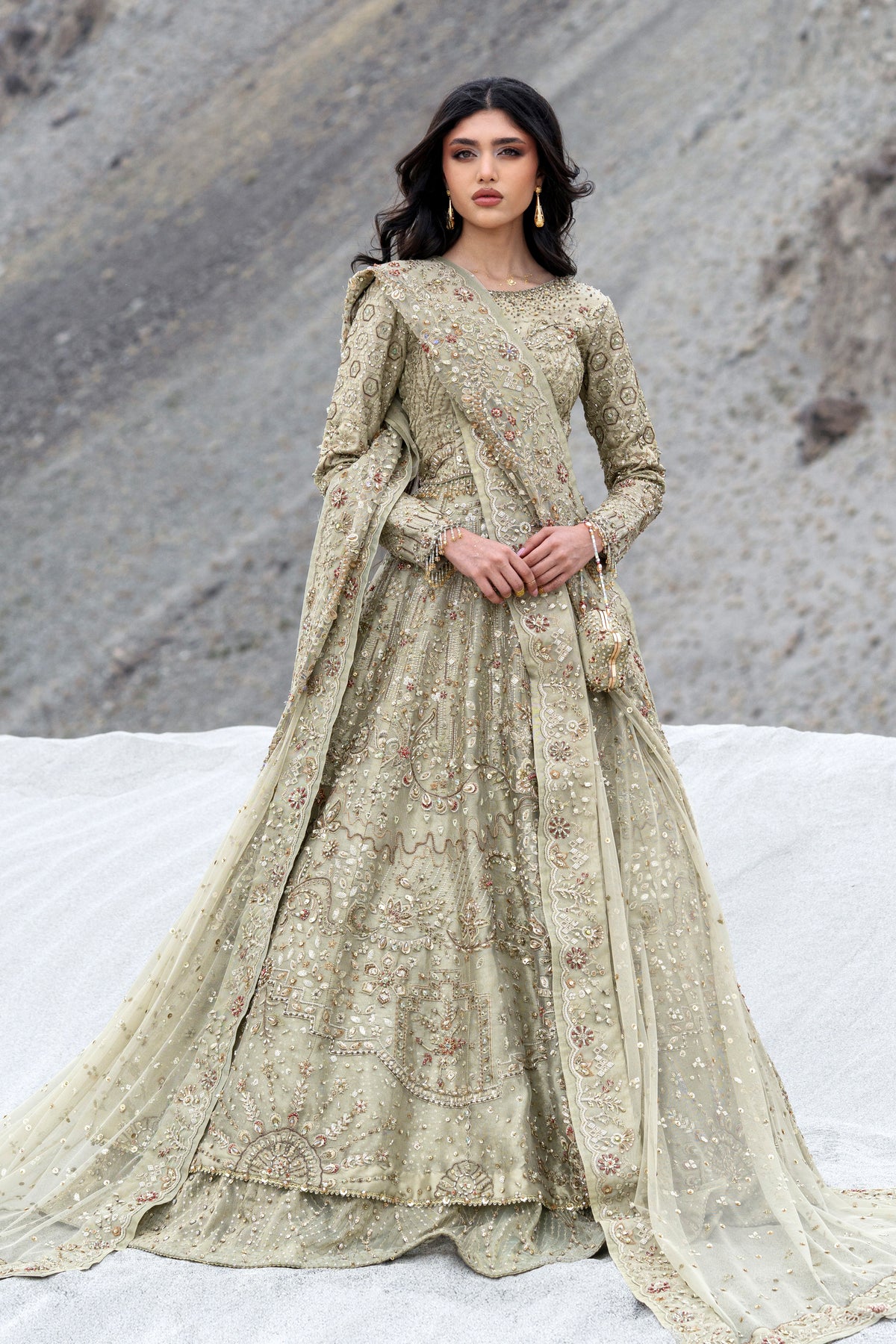
Shamira shows how Golden can give a pastel bridal look a warmer and richer direction. The shade creates a soft base while still allowing detailed embroidery and bridal work to stand out clearly.
Kadeen — Pistachio:
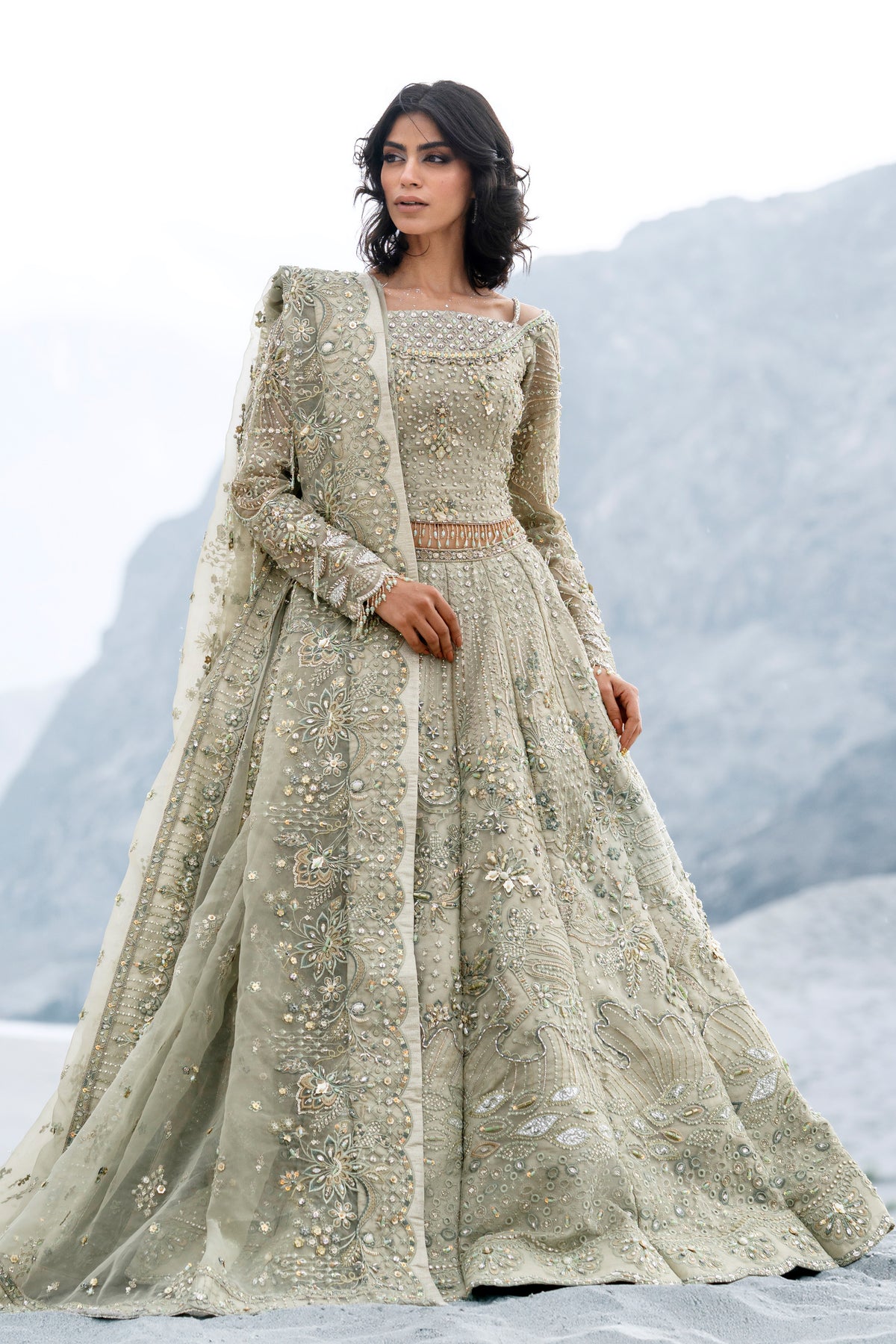
Kadeen uses Pistachio to create a fresh and softer bridal look. This shade keeps the outfit light in appearance while giving enough contrast for detailed work and finishing to remain visible.
Onaifa — Light Aqua:
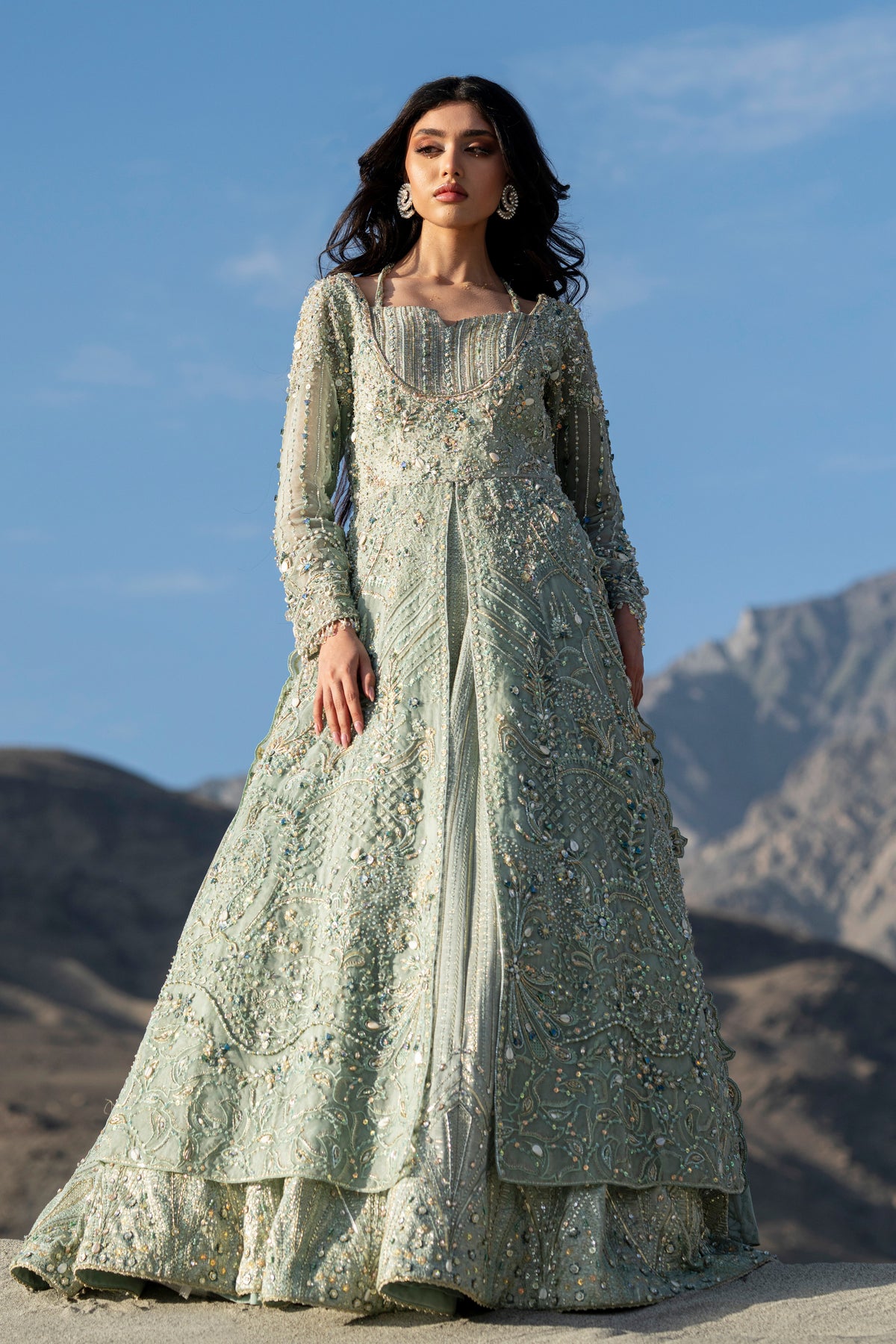
Onaifa brings Light Aqua into the soft bridal colour palette for a cooler and calmer look. The shade gives the outfit a clean visual feel and works well when the design includes fine detailing without making the overall look appear too heavy.
Lilac, Blush Pink, Skin and Peach for Softer Colour Directions:
These softer shades give different pastel wedding colour ideas while keeping the overall bridal look light. Colour works as the first filter, while the fabric, silhouette, and embellishment decide how that shade develops into a complete bridal design.
Haboor — Lilac:
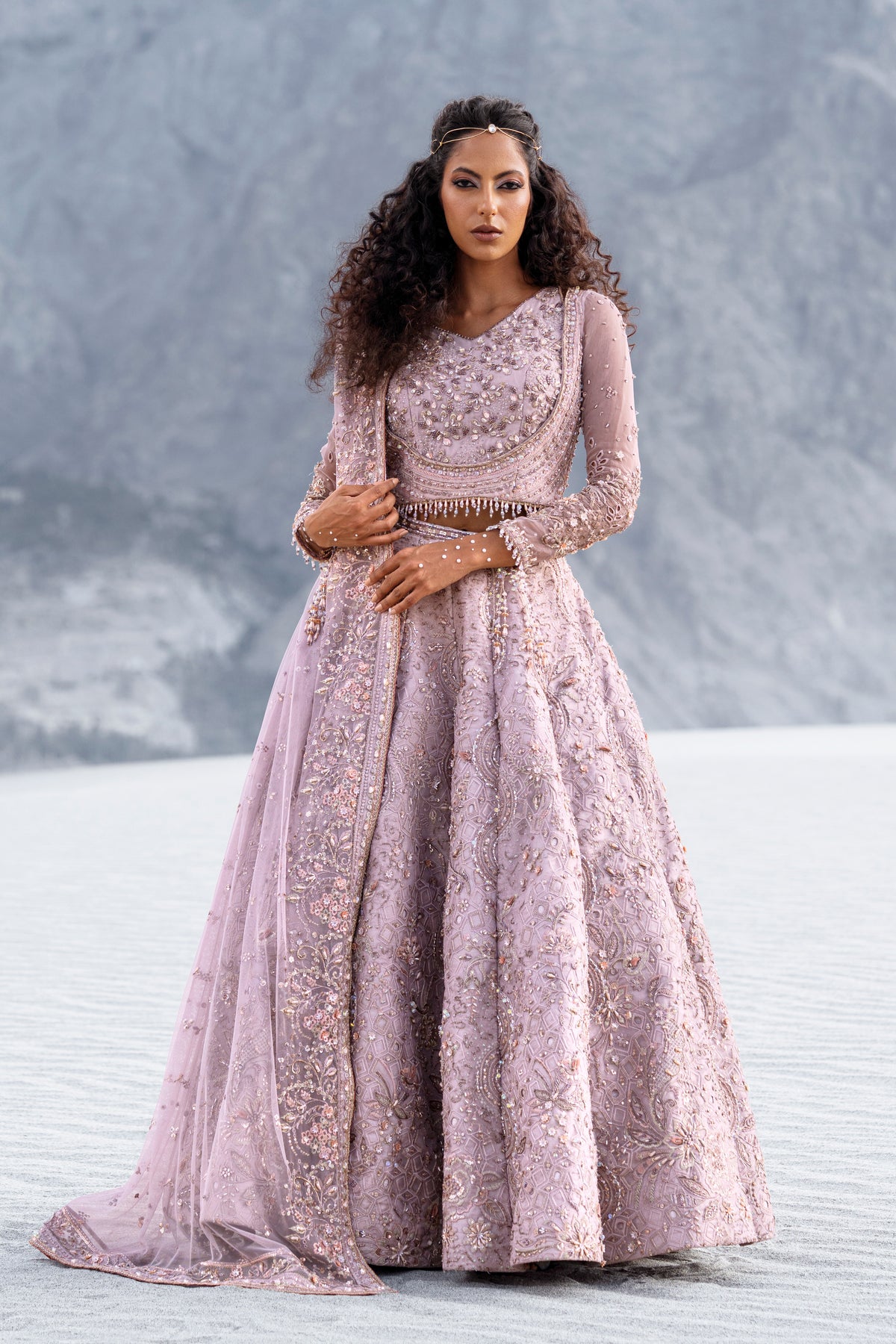
Lilac gives Haboor a cool and soft colour direction. It creates a gentle base that can carry detailed bridal work without making the shade itself feel strong or heavy.
Deebaj — Blush Pink:
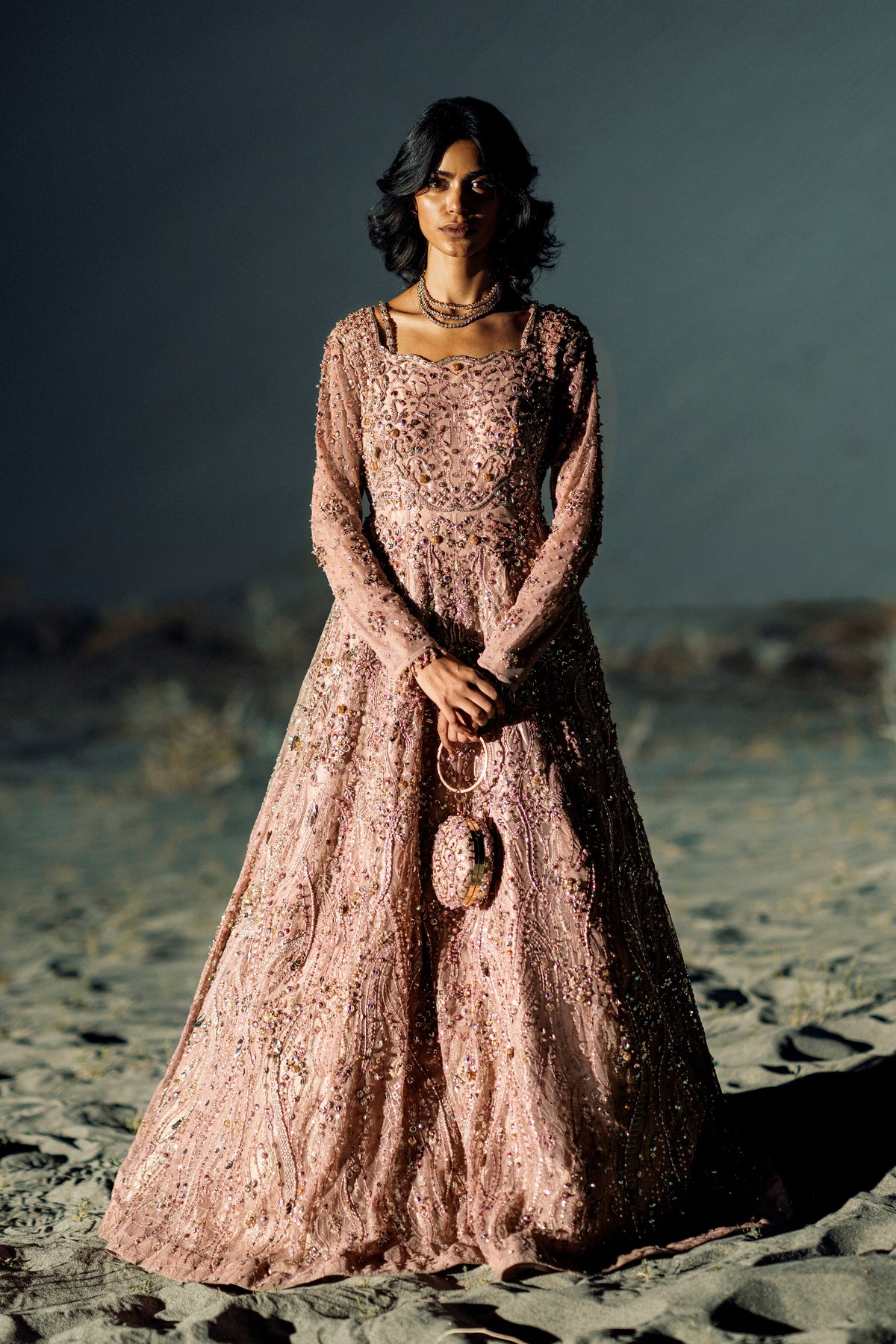
Blush Pink gives Deebaj a warmer and more delicate look. Its soft pink base keeps the colour noticeable while leaving room for the silhouette and decorative work to shape the final appearance.
Haneen — Skin:
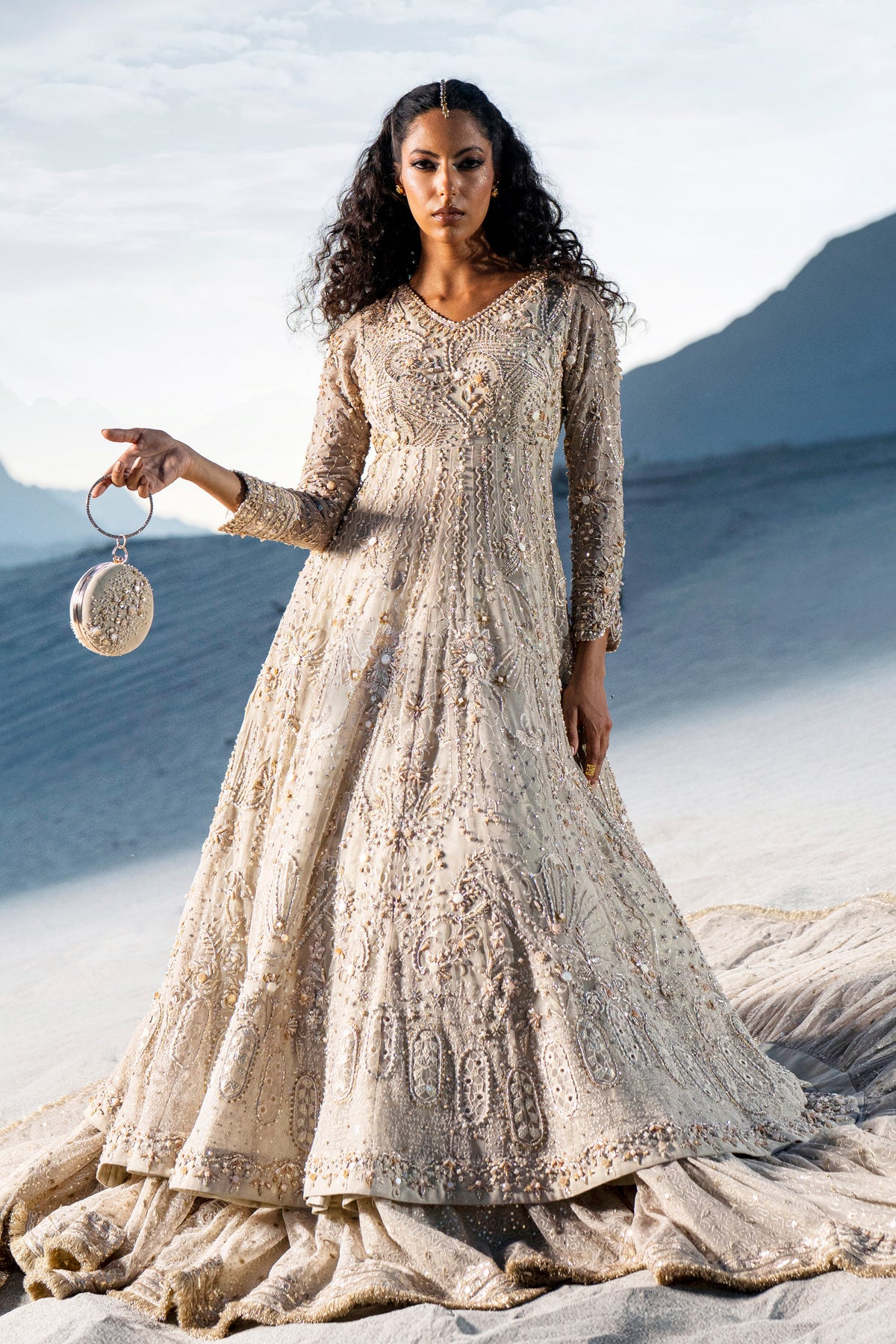
Skin offers a more neutral direction in Haneen. Because the base colour stays subtle, the fabric texture, embroidery, borders, and other details can become more visible within the overall design.
Adifaah — Peach:
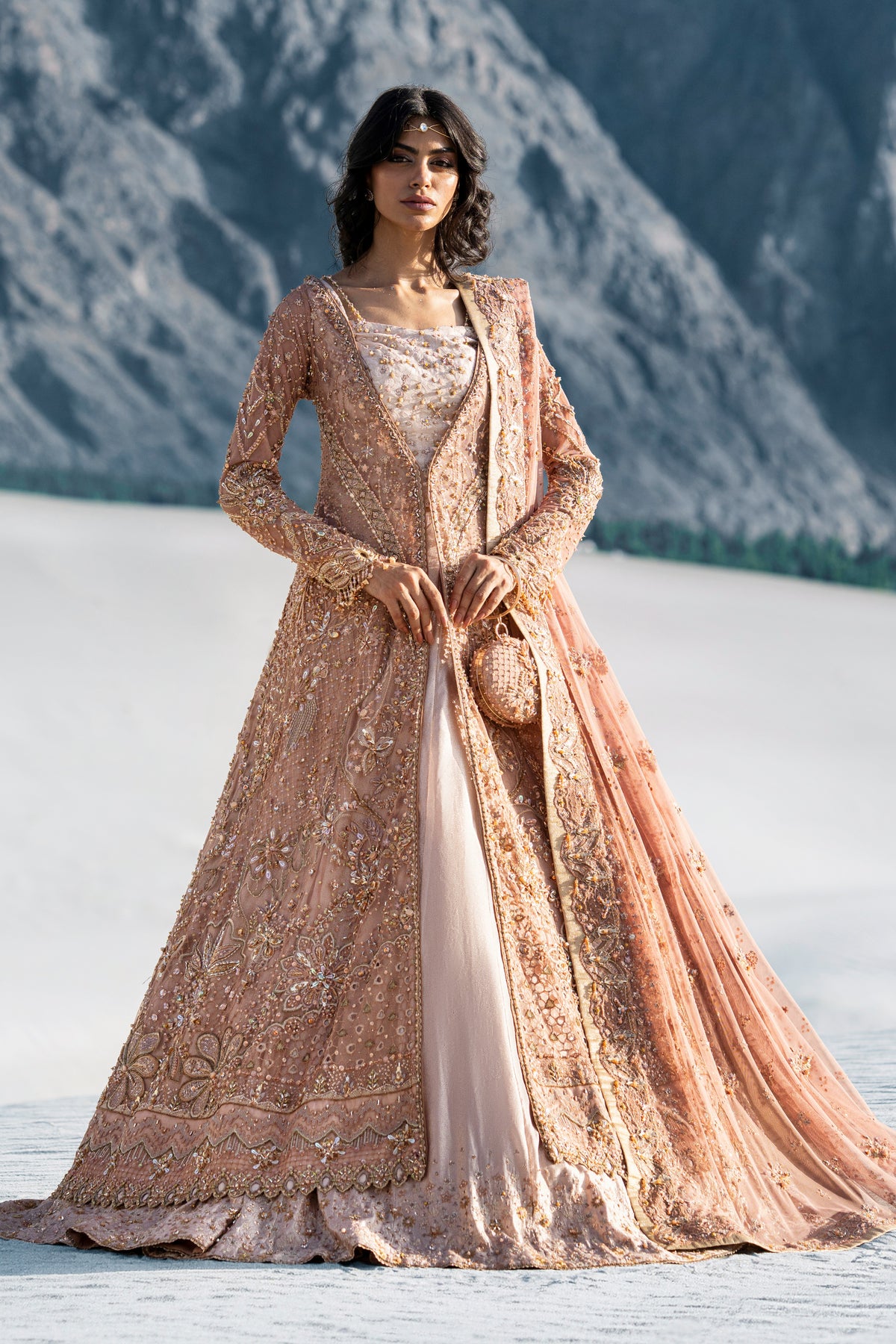
Peach gives Adifaah a soft but slightly warmer colour character. It sits between pink and warmer neutral tones, creating a useful base for a bridal design where the fabric, shape, and embellishment can add further depth.
Compare Bridal Fabrics by Their Role in the Outfit:
- A useful bridal fabric guide should explain what each fabric does in the complete outfit.
- Some fabrics help the outfit hold its shape better.
- Others create a softer fall and lighter movement.
- Heavier fabrics can support detailed embroidery and bridal handwork.
- Lighter fabrics work well for soft layers, flares, and dupattas.
- The same fabric may look different depending on where it is used in the design.
- Shirts and bodices often need more structure than dupattas.
- Lehenga and flare fabrics should support the shape and movement of the outfit.
- At NAQSHI, fabric choices are planned according to the role of each part of the bridal look.
- Comparing fabrics by purpose makes it easier to understand how they affect the final shape, fall, and finish.
Net vs Organza in Bridal Outfits:
The Net vs Organza bridal dress comparison should focus on how each fabric works inside the outfit. Net gives a lighter and more transparent layer, while Organza adds more shape and structure. Neither fabric is simply better; the right choice depends on where it is used, what fabric is paired with it, and how the complete bridal design needs to fall and hold its form.
Deebaj — Net + Tissue for Layered Volume:
Deebaj uses Net with Tissue in the maxi and Net again for the dupatta. The Net keeps the outer surface light and see-through, while Tissue gives the maxi more body underneath. This pairing creates layered volume without making the complete look feel too stiff.
Adifaah — Net for a Softer Front-Open Shape:
Adifaah uses Net for both the front-open gown and dupatta. Here, Net supports a softer outer layer and allows the detailing beneath it to remain visible. Its light fall also suits the open gown shape, where movement and transparency are part of the overall design.
Kadeen — Organza + Chanar Tissue for More Structure:
Kadeen combines Organza and Chanar Tissue in the choli and lehenga, with an Organza dupatta. Organza gives the outfit a cleaner and more defined form, while Chanar Tissue adds body to the lehenga. Together, they help the bridal silhouette hold its shape while keeping the upper layers light.
|
Fabric Feature |
Net |
Organza |
|
Overall feel |
Soft and light |
Light but more structured |
|
Transparency |
More see-through |
Slightly less transparent |
|
Shape |
Falls softly |
Holds shape better |
|
Layering |
Works well for soft layers |
Works well for cleaner, defined layers |
|
Bridal use |
Gowns, maxis, dupattas and overlays |
Cholis, lehengas, dupattas and structured layers |
|
Supporting fabric |
Tissue in Deebaj adds body below the Net |
Chanar Tissue in Kadeen adds body with Organza |
|
Main role in the outfit |
Softness, transparency and layering |
Shape, structure and cleaner form |
Tissue vs Chanar Tissue in Layered Bridal Designs:
The Tissue vs Chanar Tissue bridal outfit comparison becomes clearer by looking at where each fabric sits within a layered design. Both can add body and support bridal shapes, but their role changes when used for a choli, lehenga, inner layer, or another part of the outfit.
Shamira — Pure Tissue + Tissue:
Shamira uses Pure Tissue and Tissue across its bridal layers. The fabric gives the outfit body while helping the main shape stay visible. When used across different parts of the design, these Tissue layers also create a smooth base for detailed bridal work.
Haboor — Chanar Tissue Combination:
Haboor shows how Chanar Tissue can become part of a layered bridal design. Its role is to support the shape of the outfit while giving the worked sections a clear base. This allows the fabric and bridal detailing to work together rather than compete for attention.
Adifaah — Chanar Tissue in Layered Sections:
Adifaah combines Chanar Tissue with other fabrics to build depth within the outfit. Here, Chanar Tissue works as a supporting layer, adding body where the design needs more form while keeping the outer bridal layers visually separate
|
Comparison Aspect |
Tissue |
Chanar Tissue |
|
Role in the outfit |
Builds body across main and supporting sections |
Supports layered and shaped sections |
|
Common placement |
Cholis, lehengas, inners and layered parts |
Cholis, lehengas, inners and supporting layers |
|
Layering effect |
Helps create a smooth, fuller base |
Helps give layered sections clearer form |
|
With bridal work |
Provides a base for detailed surface work |
Supports worked areas while maintaining shape |
Why Fabric Combinations Matter More Than One Fabric Name:
Different bridal fabric combinations can be used across one outfit because each part needs a different level of shape, fall, and support. NAQSHI’s bridal product Haneen is a clear example: its maxi combines Net with a Tissue inner, while the Tail Lehenga uses Net, Tissue, and PK Raw Silk. This shows why a bridal outfit should not be described by just one fabric name. Instead, each part such as the maxi, lehenga, inner, or dupatta should be checked separately to understand how the fabrics work together in the complete design.
Choose a Bridal Silhouette That Matches the Desired Look:
The shape of an outfit has a major effect on how a pastel bridal look appears. Different pastel bridal silhouettes can make the same soft colour feel flowing, structured, layered, or more detailed. A choli with a lehenga creates a different shape from a maxi, gown, or long frock, while the flare and layers further change the overall look. The silhouette should work with the fabric and bridal work so the complete outfit feels balanced, moves well, and carries the right level of detail.
Choli-Lehenga vs Maxi vs Gown:
|
Comparison Point |
Choli-Lehenga |
Maxi |
Gown |
|
Basic structure |
Two separate pieces: a fitted choli and a flared lehenga |
One continuous outfit from bodice to flare |
A long outer piece that creates a full-length shape |
|
Upper part |
Separate fitted choli |
Bodice is joined with the lower flare |
Can have a fitted or shaped upper section |
|
Lower part |
Separate flared lehenga |
Flare begins below the bodice as part of one piece |
Falls in one long outer layer |
|
Overall look |
More defined and clearly divided |
Smooth and flowing from top to bottom |
Long and layered in appearance |
|
Shape |
Clear fitted-top and wide-bottom contrast |
Creates a continuous bodice-to-flare shape |
Creates a long outer silhouette |
|
Best design role |
Works well when the upper and lower pieces need separate detailing |
Works well when the design needs a connected, flowing shape |
Works well when the bridal set needs extra depth and layering |
Layered vs Panelled Flare:
A layered bridal lehenga builds depth through separate fabric layers, while a panelled bridal flare creates width by joining shaped panels. Both can create a fuller bridal silhouette, but they form the volume in different ways.
|
Design Detail |
Layered Bridal Lehenga |
Panelled Bridal Flare |
|
Basic structure |
Uses two or more fabric layers |
Uses separate stitched panels |
|
How volume is created |
Builds fullness by placing layers over or under each other |
Builds width through the number and shape of the panels |
|
Overall shape |
Creates a deeper, more layered look |
Creates a wide and clearly shaped flare |
|
Movement |
Layers move separately and add soft flow |
Panels help the flare spread in a more even way |
|
Fabric use |
Can combine different fabrics across the layers |
Often uses the same main fabric across joined panels |
|
Work placement |
Embroidery, borders, and details can appear on different layers |
Work can follow individual panels or repeat around the flare |
|
Visual effect |
Adds depth from one layer to another |
Makes the width and shape of the flare more noticeable |
|
Main design role |
Works well when the outfit needs added depth and layered volume |
Works well when the design needs a broad, balanced, and defined flare |
Look Beyond Pastel Colour and Examine the Workmanship:
Pastel colour sets the base of a bridal outfit, but the workmanship decides how detailed and complete it looks. Bridal embellishment details such as adda work, embroidery, sequins, stones, borders, and hand-finished touches can add depth to even the softest shade. Their placement also matters because work on the neckline, sleeves, bodice, flare, or hem can change the visual balance of the outfit. For this reason, the quality, amount, and placement of the work should be checked along with the colour rather than judged separately.
Lighter Detailing vs Denser Adda, Sequin and Sheet Work:
Pastel bridal wear can carry either light or dense workmanship. The difference comes from the amount, placement, and mix of adda work, machine embroidery, sequins, sheet work, tilla, and cutwork used across the outfit.
|
Design Detail |
Lighter Detailing |
Denser Adda, Sequin & Sheet Work |
|
Amount of work |
Uses smaller or more spaced-out details |
Uses more work across larger areas of the outfit |
|
Adda work |
An adda work bridal outfit may use small motifs or selected handworked areas |
Adda work can cover the bodice, sleeves, borders, or flare more closely |
|
Sequins |
Sequin bridal detailing is used lightly to add a soft shine |
Sequins are placed more closely to create stronger shine and depth |
|
Sheet work |
Sheet work may appear only in selected areas |
A sheet work bridal dress can use wider worked areas for a fuller surface |
|
Machine embroidery |
Fine embroidery keeps the surface clean and open |
Denser embroidery can fill larger parts of the design |
|
Tilla |
Small tilla details add light definition |
More tilla work can make borders and motifs look richer |
|
Cutwork |
Used in limited areas for a neat decorative finish |
Can be combined with other work to create more detailed sections |
|
Overall appearance |
Keeps more of the pastel fabric visible |
Makes the outfit look richer and more heavily worked |
|
Main design effect |
Creates a softer and less crowded bridal look |
Creates greater visual depth without changing the pastel colour base |
Check Where the Embellishment Is Placed:
The quality of bridal workmanship details becomes clearer when the full NAQSHI outfit is checked piece by piece. Front embroidery is only one part of the design, so the work on other areas should also be considered.
Neckline and Bodice:
The neckline and bodice usually carry some of the most visible work. Check how embroidery, sequins, adda work, or other details are placed and whether the design continues smoothly across the upper part.
Sleeves and Back:
Sleeves and the back can add important detail that may not appear in front-facing images. Worked cuffs, motifs, borders, or back detailing can make the outfit feel more complete from every angle.
Panels and Lower Flare:
Panels and the lower flare show how the workmanship continues through the main silhouette. Repeated motifs, worked panels, or detailed sections can add depth and make the flare more noticeable.
Borders:
Borders help define areas such as the hem, sleeves, lehenga, or gown edges. Their width, work, and placement can strongly affect how finished the complete outfit looks.
Dupatta:
The dupatta should also be checked for centre motifs, four-side borders, pallu work, sequins, or other finishing. A detailed dupatta can add another layer of workmanship to the bridal set.
Pouch or Clutch:
If the outfit includes a pouch or clutch, its fabric and detailing should also be considered. Matching embroidery or embellishment helps connect the accessory with the rest of the bridal look.
What Should Be Checked Before Comparing Two Pastel Bridal Outfits?
Do Not Compare Outfits by Colour Alone:
- When choosing bridal colours, do not compare two outfits only by their shade.
- Check the fabric because it can change the fall, shine, and overall look.
- Look at the silhouette to see whether the outfit is a lehenga, maxi, gown, or another shape.
- Compare the flare because one outfit may have a wider or more layered lower part.
- Check the amount of embroidery used across the complete design.
- Look at the density of adda work, sequins, sheet work, or other embellishment.
- Check where the work is placed, including the bodice, sleeves, panels, and borders.
- Compare the dupatta treatment, such as centre motifs, four-side borders, or pallu work.
- Review the number of included pieces because one bridal set may offer more complete coordination than another.
- Judge the full design together, as two similar pastel shades can still create very different bridal looks.
Check Every Piece Included in the Outfit:
Before comparing two bridal designs, it is important to understand all the bridal outfit pieces included in each set. NAQSHI bridal sets can have different combinations, so the main outfit alone does not show everything that comes with the design.
Choli and Lehenga:
A bridal set may include a separate choli and lehenga. These two pieces create the main shape of the outfit and may use different fabrics, embroidery, handwork, or border details.
Maxi:
Some bridal sets use a maxi as the main piece. Since the bodice and lower flare form one continuous outfit, the fabric, panels, flare, and work should be checked as part of the same design.
Gown and Inner:
A gown may come with an inner layer underneath. The gown creates the outer look, while the inner can support coverage, shape, and layering. Both pieces should be considered when understanding the full set.
Dupatta:
The dupatta is an important part of the complete bridal outfit. Its fabric, borders, centre work, pallu details, and finishing can add another level of detail to the overall design.
Pouch or Clutch:
Some bridal sets also include a matching pouch or clutch. These pieces may carry similar fabric, embroidery, or handwork, helping them connect with the rest of the outfit.
Compare the Complete Set;
Two bridal outfits may look similar at first but include very different pieces. Before comparing them, check whether the set contains a choli, lehenga, maxi, gown, inner, dupatta, pouch, or clutch so the comparison is based on the complete design rather than only the main piece.
Review Finishing Beyond the Main Front Panel:
Good bridal finishing details should continue beyond the main front panel. When reviewing a NAQSHI bridal outfit, check the sleeves, back, borders, scallops, cutwork, tassels, hangings, panel detailing, and dupatta edges to see how the design is finished from every side. Accessories such as a matching pouch or clutch should also be considered when they are part of the set. These smaller details show how much attention has gone into the complete outfit and give a better view of its workmanship than front embroidery alone. .
How NAQSHI's Pastel Bridal Designs Bring These Elements Together:
The NAQSHI pastel bridal collection shows how colour, fabric, silhouette, and workmanship can work together within one complete bridal design. This also gives a useful reference when comparing Wedding dresses brands in Pakistan by design depth, fabric use, and workmanship. Across different outfits, soft pastel shades are paired with choli-lehenga sets, maxis, gowns, layered fabrics, and detailed dupattas to create different visual directions. The bridal embellishment details, including adda work, embroidery, sequins, worked borders, and finishing, also change how light or detailed each outfit appears. Looking at these elements together gives a clearer way to compare pastel bridal designs beyond colour alone.
Compare NAQSHI Dupatta Treatment, Accessories and Detailed Work Before Shortlisting:
Before shortlisting a complete bridal outfit, compare each design beyond its overall colour and shape.
- Check the fabric combination used across the main outfit, inner layers, lehenga, gown, or dupatta.
- Review the dupatta treatment, including centre work, borders, pallu details, and finishing.
- Compare the worked borders on the sleeves, hem, flare, and dupatta.
- Check where the adda work is placed and how much of the outfit it covers.
- Look at the amount and placement of sequins across the design.
- Review tilla work to see how it adds detail to motifs, borders, or panels.
- Check whether sheet work is used lightly or across wider areas.
- Look at cutwork on borders, sleeves, panels, or other finished edges.
- Check whether the set includes a matching pouch or clutch and how its detailing connects with the outfit.
- Compare all these details together to understand the workmanship, finishing, and value of the full bridal set before making a final selection.
Final NAQSHI Checklist for Choosing a Pastel Bridal Outfit:
Confirm These Details Before Making the Final Selection:
Before making the final choice, review the full outfit instead of focusing on colour alone. A clear checklist helps compare the design, fabric, pieces, and workmanship in a more practical way.
- Preferred Shade: Decide whether the colour direction is Golden, Pistachio, Light Aqua, Lilac, Blush Pink, Skin, Peach, or another defined pastel shade.
- Wedding Event: Check whether the outfit fits a Nikkah, Walima, reception, engagement, or another wedding celebration.
- Silhouette: Compare choli-lehenga, maxi, gown, layered silhouettes, and panelled structures based on the look and shape required.
- Fabric Combination: Review the fabric used in every major part of the outfit instead of judging the full design by one fabric name.
- Dupatta Treatment: Check the head border, side borders, centre spray, scallops, embroidery, and embellishment across the dupatta.
- Included Pieces and Accessories: Confirm what comes with the NAQSHI outfit, including the inner, pouch, or clutch where included.
- Workmanship Details: Look closely at embroidery, adda work, sequins, tilla, sheet work, cutwork, borders, tassels, and overall finishing.
Frequently Asked Questions
Which pastel colour works well for a Nikkah bridal outfit?
A pastel Nikkah bridal outfit can work well in Golden, Pistachio, Light Aqua, Lilac, Blush Pink, Skin, or Peach. The best direction depends on the fabric, silhouette, embellishment, and overall look of the bridal design.
Is Net or Organza better for a pastel bridal outfit?
Both Net or Organza for bridal wear can work beautifully depending on their role in the outfit. Net gives a softer and more transparent layer, while Organza adds more shape and structure to gowns, cholis, lehengas, and dupattas.
What is the difference between a bridal maxi and a choli-lehenga?
In a bridal maxi vs lehenga comparison, the main difference is structure. A bridal maxi creates one continuous shape from the bodice to the flare, while a choli-lehenga uses a separate fitted upper piece with a separate flared lower piece.
Does a pastel bridal outfit need light embellishment?
No. Pastel bridal embellishment can be light or detailed because pastel mainly refers to the colour direction. Soft shades can still carry adda work, embroidery, sequins, sheet work, tilla, cutwork, and worked borders.
What should be checked in a bridal dupatta?
When learning how to choose a bridal dupatta, check the fabric, head border, side borders, scallops, centre spray, all-over work, and embellishment. The dupatta should also work well with the colour, fabric, and detailing of the main outfit.
What pieces can be included in a complete bridal outfit?
A multi piece bridal outfit may include a choli, lehenga, maxi, gown, inner, dupatta, pouch, or clutch. The exact combination depends on the design, so each included piece should be checked before comparing bridal outfits.


