

Net vs Organza Bridal Dupatta in The Vow: Which Should You Choose? | NAQSHI
A bridal dupatta can change how the whole outfit falls, moves, and frames the look. In The Vow Bridal Collection, both Net and Organza work well for bridal dressing, but neither is always the better choice. Net usually gives a softer drape and lighter look, while Organza offers more structure and holds its shape more clearly. The right choice depends on the desired fall, finishing, and overall effect, as well as how the dupatta works with the rest of the bridal outfit.
Net and Organza at a Glance:
For a clear bridal dupatta fabric comparison, the main difference comes down to how each fabric falls and holds its shape. Net feels softer and flows more easily, while Organza has a firmer feel and holds a more defined shape. However, embroidery, borders, and finishing can affect how either fabric falls, so the dupatta should always be considered as part of the complete bridal outfit. To understand how these and other fabrics work across the full outfit, explore The Vow bridal fabric guide.
The main difference is how each fabric holds its shape:
Net creates a soft sheer layer that falls more freely around the outfit, while Organza naturally keeps a firmer shape. This difference in dupatta structure affects how the fabric sits over the head, shoulders, and bridal silhouette. In simple terms, Net works well for a softer fall, while Organza gives a more defined and shaped look.
How a Net Dupatta Behaves Around a Bridal Silhouette:
A Net bridal dupatta has a soft and flexible fall, so it follows the bridal silhouette instead of holding a firm shape around it. Its light, sheer base lets the details of the choli, maxi, or lehenga remain visible underneath. Once embroidery and worked borders are added, the weight can change how the Net falls, making the finishing just as important as the fabric itself.
Net allows embroidery and border work to sit over a softer visual layer:
A soft Net dupatta drape allows bridal embroidery to stand out without covering the details of the main outfit. An embroidered border also gives the light Net a clearer edge and helps frame the bridal silhouette. This effect can be seen across Shamira, Deebaj, Haneen, and Adifaah in The Vow, although each outfit uses the dupatta differently.
Shamira — Soft Net Over a Layered Bridal Look:
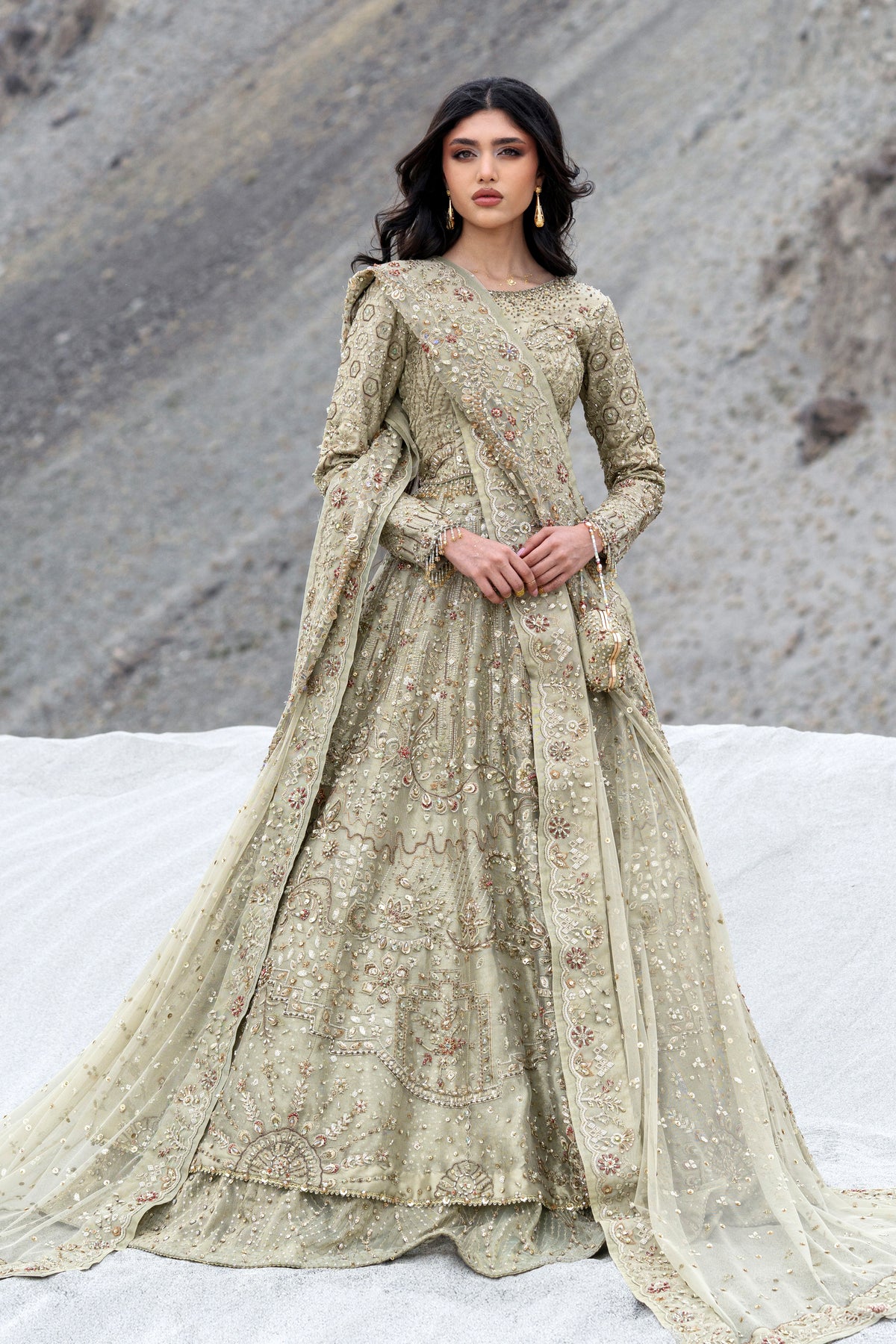
Shamira pairs its detailed bridal look with a Net dupatta that adds a softer layer over the outfit. The light base keeps the layers and work underneath visible, while the finished border gives the dupatta a clear outline.
Deebaj — A Light Layer Around a Full Maxi:
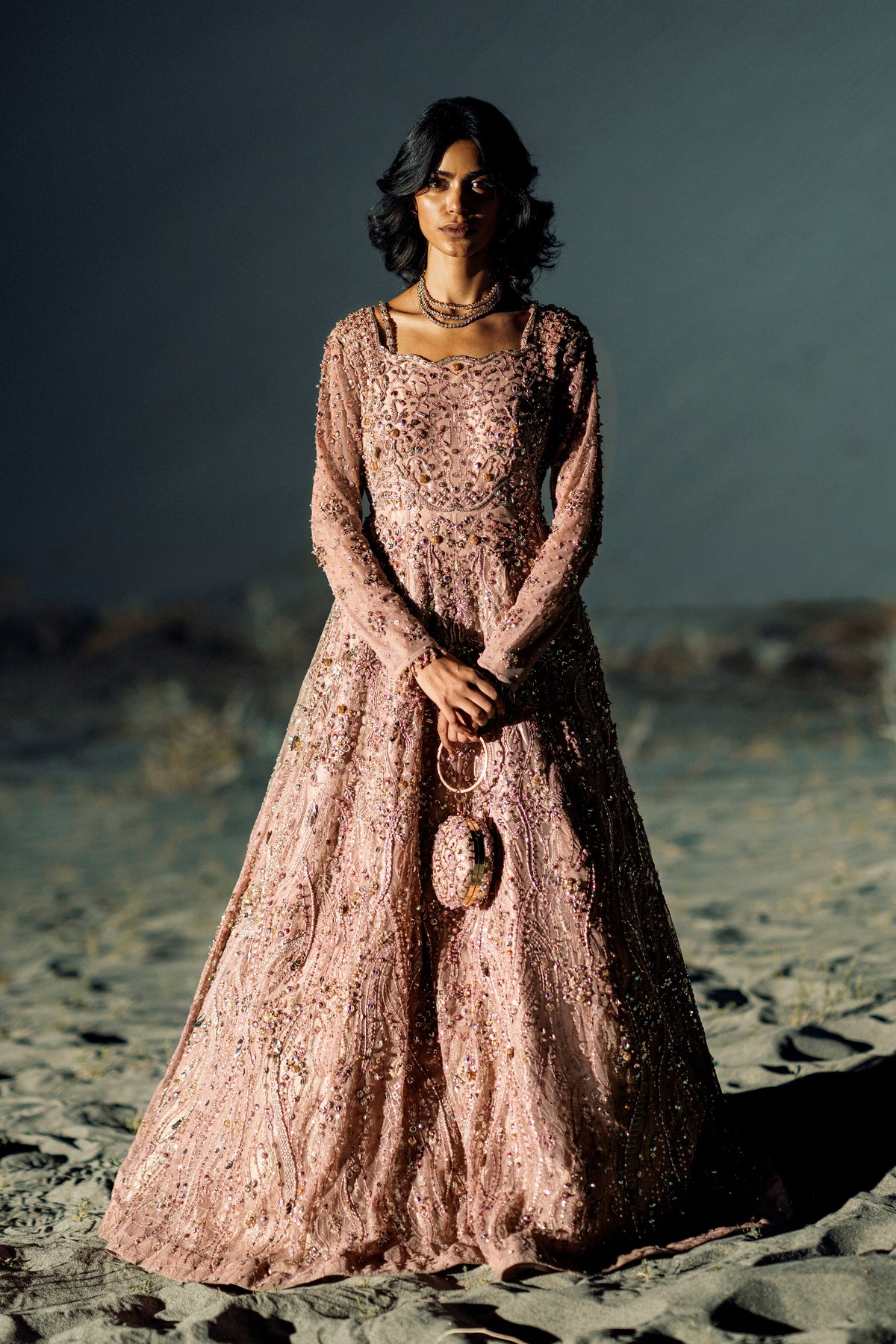
With Deebaj, the Net dupatta sits lightly around the full bridal maxi instead of adding another firm layer. Its soft fall works with the wider silhouette, while the detailed edge helps frame the outfit without taking attention away from the maxi.
Haneen — Sheer Net That Keeps the Outfit Visible:
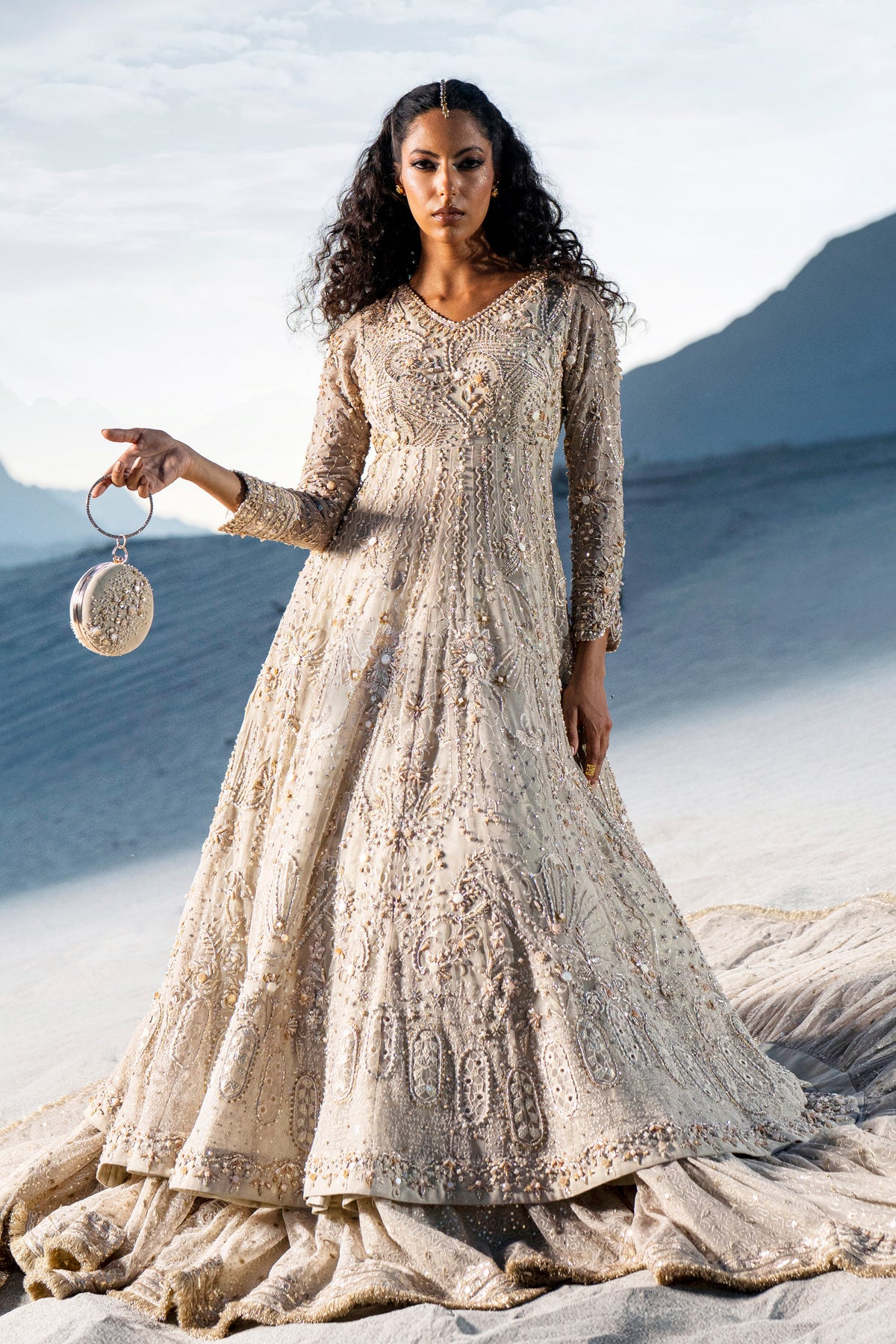
Haneen uses the sheer quality of Net to keep the bridal details underneath easy to see. The dupatta adds another worked layer to the look, but its lighter base helps prevent the overall silhouette from appearing too covered or visually heavy.
Adifaah — A Soft Drape with a Defined Edge:
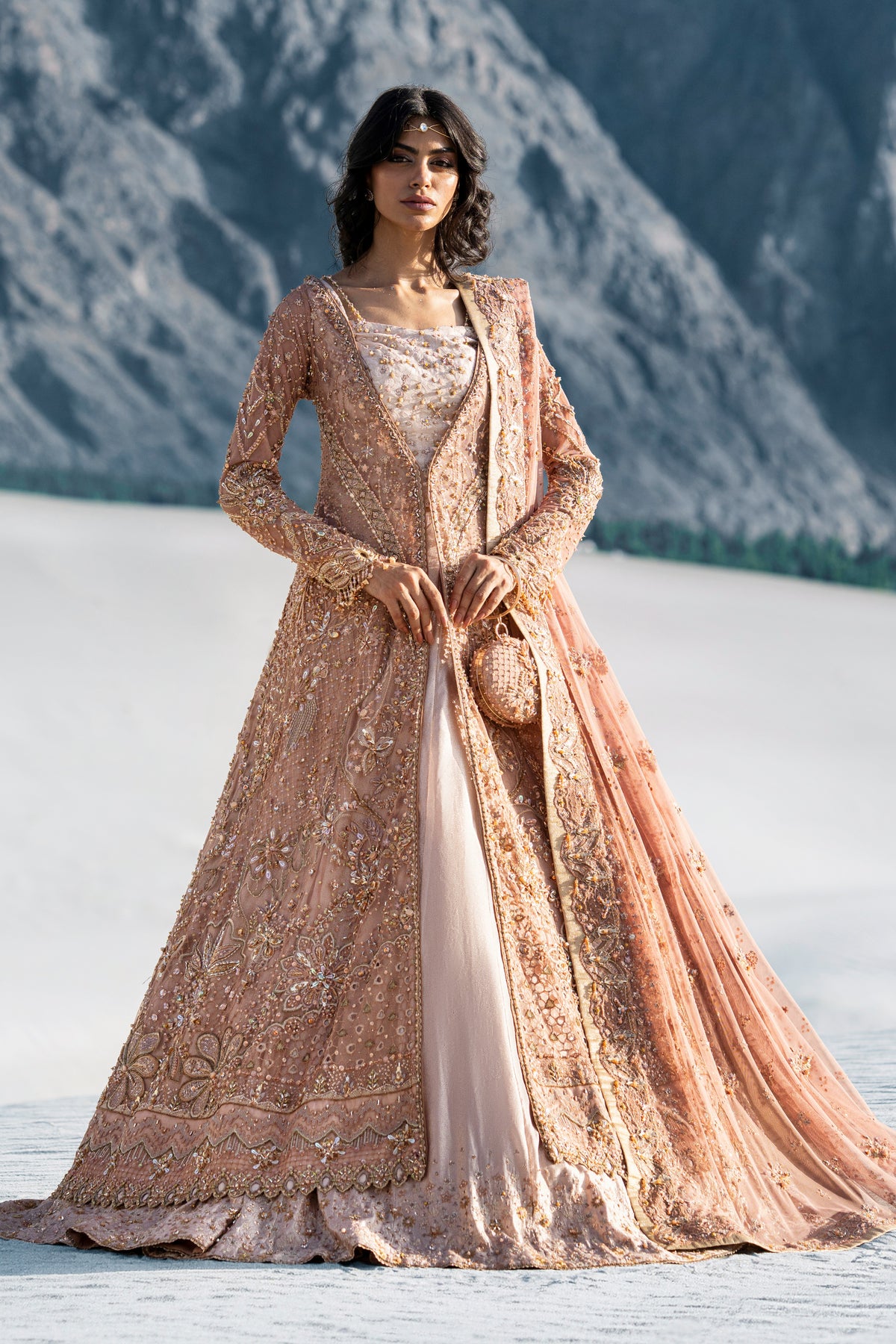
Adifaah shows how a soft Net base can work with a more noticeable finished edge. The dupatta falls naturally around the bridal silhouette, while its border adds definition and completes the look without taking away the softness of the Net.
What Changes When the Dupatta Is Organza:
An Organza bridal dupatta changes the look mainly through its firmer shape and more defined fall. Unlike soft Net, Organza does not sit as closely around the bridal silhouette and can hold its shape more clearly over the head and shoulders. Borders and embroidery can add more weight, but the fabric still gives the dupatta a structured look that can frame the complete bridal outfit.
Organza creates a more defined outer frame:
The firmer Organza dupatta structure helps create a clearer frame around the bridal outfit, especially when detailed borders are added. In The Vow, Kadeen, Onaifa, and Haboor show how Organza can hold embroidery and a scalloped edge while keeping the dupatta’s shape more defined. Each outfit uses this quality differently.
Kadeen — A Defined Frame Around the Choli and Lehenga:
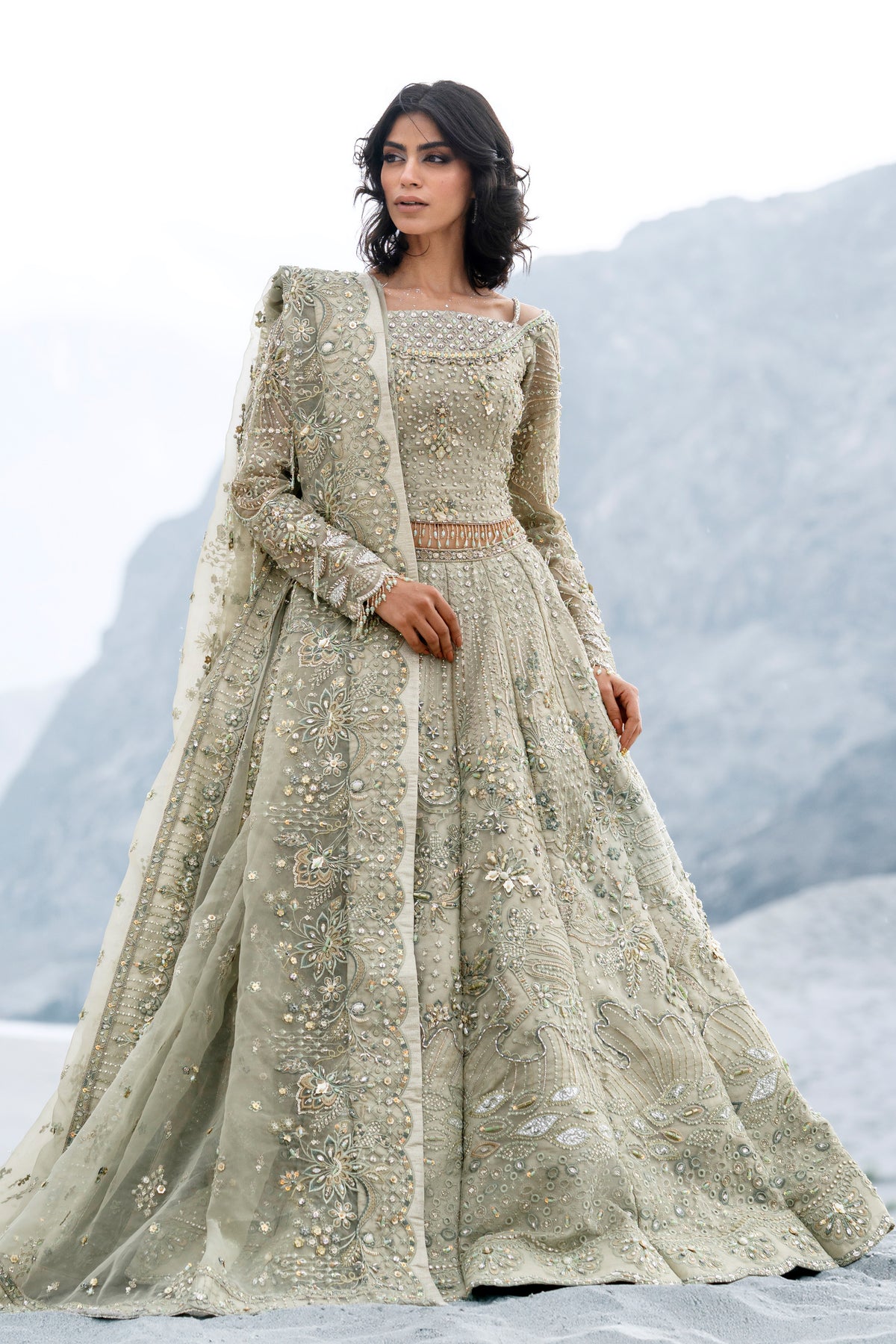
Kadeen uses an Organza dupatta to add structure around its choli and lehenga. The fabric holds its shape instead of falling too closely against the outfit, helping the worked edge create a clear frame around the bridal silhouette.
Onaifa — Structured Organza with Detailed Edges:
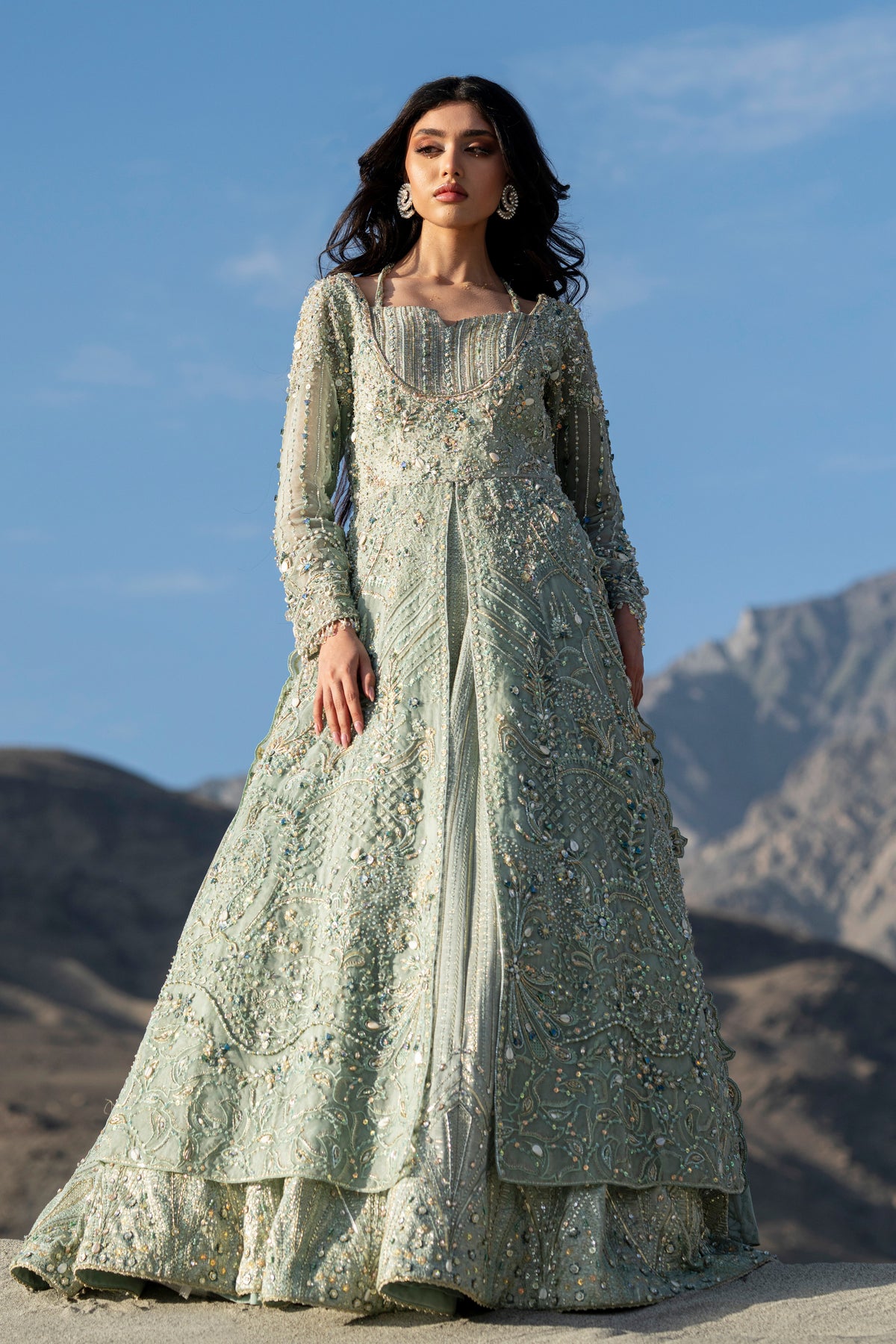
Onaifa pairs its layered bridal silhouette with an Organza dupatta. Its firmer base supports the detailed border and helps the edges stay more visible when the dupatta falls around the gown and lehenga.
Haboor — Organza That Holds the Bridal Look Together:
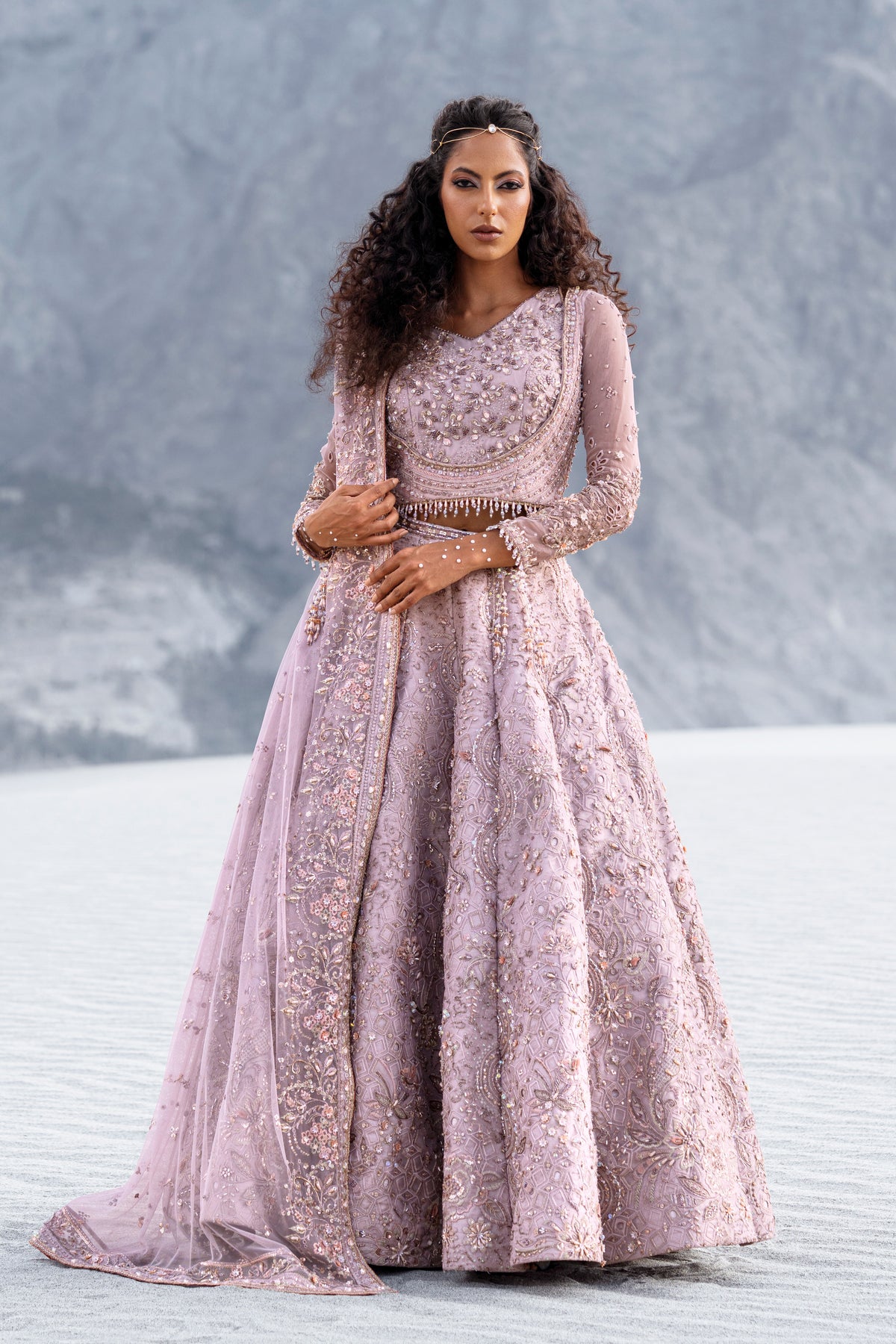
In Haboor, Organza adds a more defined outer layer around the full bridal look. The fabric gives the worked border enough support to remain noticeable, while its structured fall helps balance the detailed outfit underneath.
Border Placement Can Matter as Much as Fabric Choice:
Choosing the right wedding dupatta fabric is only part of the decision. Border placement can also change how a dupatta falls, frames the face, and sits around the bridal outfit. A heavier border can pull a soft fabric down, while a well-placed edge can give a lighter dupatta more shape. This is why we consider the fabric, border weight, embroidery, and placement together when creating a balanced bridal look.
Head borders and centre detailing change the way a dupatta is read visually:
A head border creates a stronger frame around the face and gives the upper part of the dupatta more definition. In contrast, a centre spray spreads smaller details across the fabric, adding interest without making one area look too heavy. When both are planned carefully, they guide the eye across the dupatta and help balance its border, fabric, and the bridal outfit underneath.
Repeated motifs and edge treatments create a different finish:
An all-over spray spreads small details across the dupatta, creating an even look instead of drawing attention to one area. Along the edges, cutwork can give the border a more shaped and detailed finish. Together, these details affect how the dupatta looks from the centre to the edge and help connect it with the embroidery and finishing of the bridal outfit.
Which The Vow Dupatta Direction Fits Which Requirement?
The right bridal dupatta selection depends on the effect needed with the complete outfit. In The Vow, Net works better when the look needs a softer fall and a light, sheer layer, while Organza suits a more defined shape and structured frame. Border weight, embroidery, and edge finishing also matter, so the final choice should consider how all these details work with the bridal silhouette. Dupatta transparency and layering can also affect how a pastel shade appears with the complete outfit. Explore our soft bridal colour guide for Nikkah, Walima and reception for different colour directions.
Compare fabric, border treatment and complete outfit before deciding
When choosing bridal dupatta, look beyond Net or Organza alone. Consider how the fabric falls, how much weight the border adds, and how the embroidery works with the choli, lehenga, maxi, or gown underneath. A softer Net may suit a look that needs an easy fall, while structured Organza can give the outer frame more shape. For a wider look at how colour, fabric, silhouette, workmanship, and finishing come together, see how to choose a pastel bridal outfit. To compare these details across complete bridal looks, Explore The Vow bridal collection.
Frequently Asked Questions:
Is Net softer in appearance than Organza?
Yes. Net usually creates a softer, lighter look because it falls more freely around the bridal outfit. Organza has more structure, so it gives the dupatta a firmer and more defined shape.
Which fabric holds a worked bridal border better?
Organza naturally provides more support for a worked bridal border because of its firmer structure. Net can also carry detailed borders, but the weight and placement of the work can change its soft drape.
Can Organza and Net work for the same wedding function?
Yes. Both Net and Organza can work for the same wedding function. The better choice depends on the outfit, border work, desired drape, and overall bridal look rather than the function alone.
Which is better for a soft bridal dupatta, Net or Organza?
Net is usually better when a softer and more flowing dupatta is preferred. Its sheer base creates a light layer over the outfit while allowing the bridal details underneath to remain visible.
Which dupatta fabric gives a more structured bridal look?
Organza gives a more structured bridal look. It holds its shape more clearly around the head and shoulders, which can help create a defined outer frame around the outfit.
Does a heavy border change how a Net dupatta falls?
Yes. A heavier border can add weight to Net and change its natural fall. This is why the border, embroidery, edge finishing, and fabric should be considered together when selecting a bridal dupatta.
Should the bridal outfit be considered when choosing the dupatta fabric?
Yes. The choli, lehenga, maxi, or gown underneath can affect which dupatta works best. Fabric fall, border treatment, embroidery, and the complete silhouette should work together. To compare complete looks, Explore Pakistani bridal dresses by NAQSHI.


