

The Vow Bridal Fabric Guide: Net, Organza, Tissue & Chanar Tissue | NAQSHI
Fabric does more than cover a bridal outfit; it helps create its final shape and feel. In The Vow, NAQSHI uses different bridal fabric types to build soft yet structured bridal looks through careful transparency, support, movement, and layering. Among bridal fabrics Pakistan, Net, Organza, Tissue, and Chanar Tissue each play a different role in how the outfit falls, holds its form, and creates the overall silhouette.
Why Bridal Fabrics Perform Different Roles Within One Outfit
A bridal outfit often uses several fabrics because each one has a different role. For example, Organza can add shape and support, Net can create a light and see-through layer, while Tissue can bring shine and movement. At NAQSHI, we plan the fabric structure and textile layering carefully so these fabrics work together to create the right shape, fall, and finish instead of relying on one fabric for the complete outfit.
Structure, transparency and movement should be evaluated separately
A bridal outfit can use different layers without making the design feel complicated. Sheer bridal layers, such as Net, can add a light and see-through finish, while a supportive inner fabric gives coverage and helps the outfit sit properly. A firmer fabric in the skirt can then hold the flare and shape. Looking at these bridal fabric characteristics separately helps explain why several fabrics can work together in one outfit, with each layer adding the support, coverage, or movement the design needs.
Net: A Sheer Base for Detailed Bridal Layers
Net bridal fabric is light, see-through, and easy to layer over other fabrics. In bridal outfits, it creates a soft outer layer while allowing embroidery, sequins, and handwork to stand out clearly. It can also add detail and depth without giving the outfit a thick or heavy look.
Where Net works particularly well in bridal dressing
Net works well in bridal maxis, dupattas, and light overlays because its see-through surface keeps embroidery and handwork easy to see. Net bridal layers can sit over another fabric to add detail without making the whole surface look solid or too heavy. In a flowing skirt or maxi, Net can also add a soft outer layer that moves easily while keeping the work on the outfit clear and noticeable.
Organza: Shape Without Visually Heavy Weight
Organza bridal fabric has a light, crisp feel that helps an outfit hold its shape without looking thick or heavy. Its slightly see-through surface also works well for structured layers, borders, and detailed bridal pieces where the design needs clear shape while still keeping a light overall look.
How Organza supports defined bridal silhouettes
Organza helps create shape where a bridal outfit needs more hold. In The Vow, Kadeen and Onaifa show how Organza bridal structure can support different parts of a design while keeping the overall bridal fall balanced.
Kadeen:
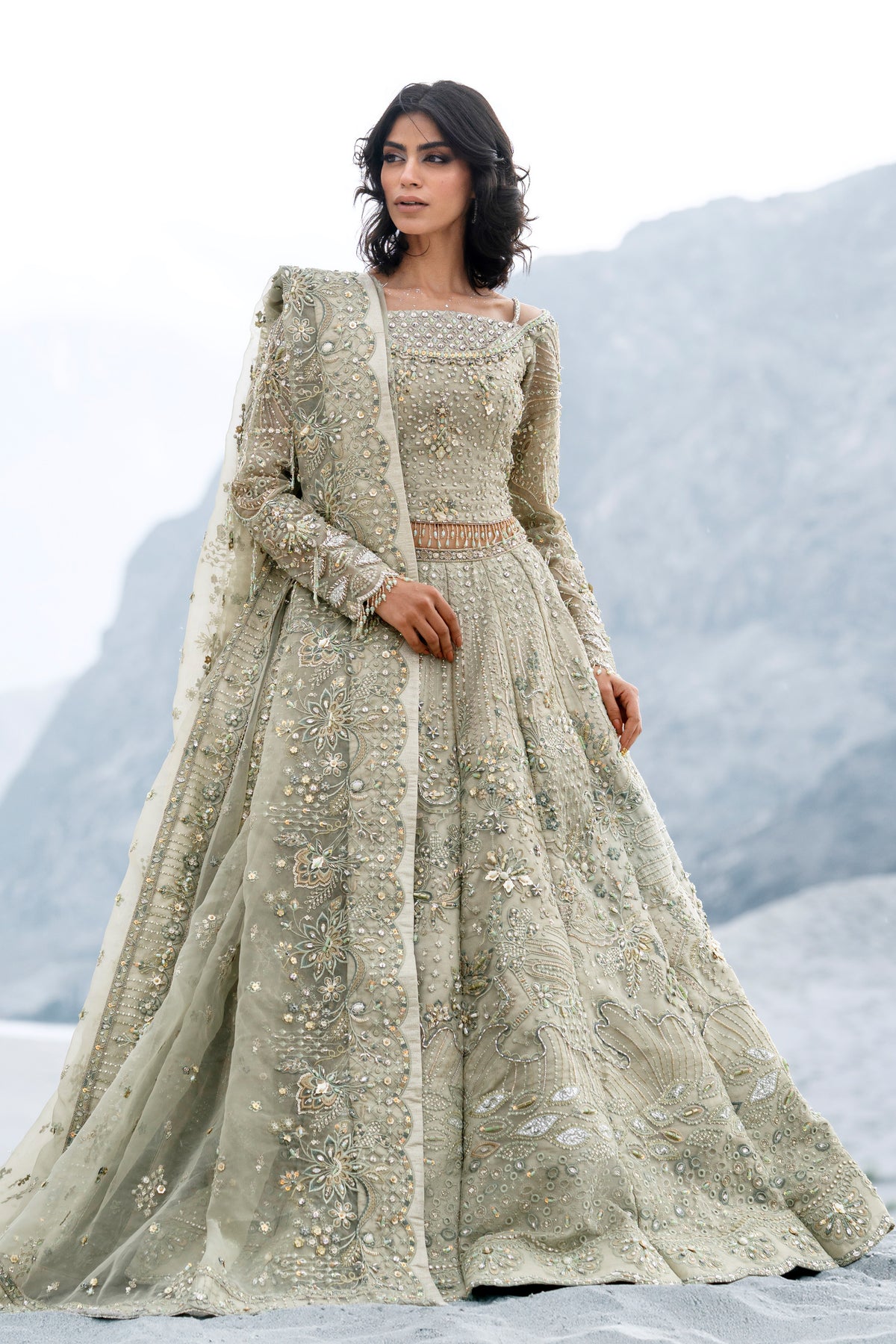
Kadeen uses Organza in its choli, where the fabric helps the fitted upper part keep a clear and defined shape. This gives the outfit support at the top while allowing the lehenga to carry the wider, flowing part of the look.
Onaifa:
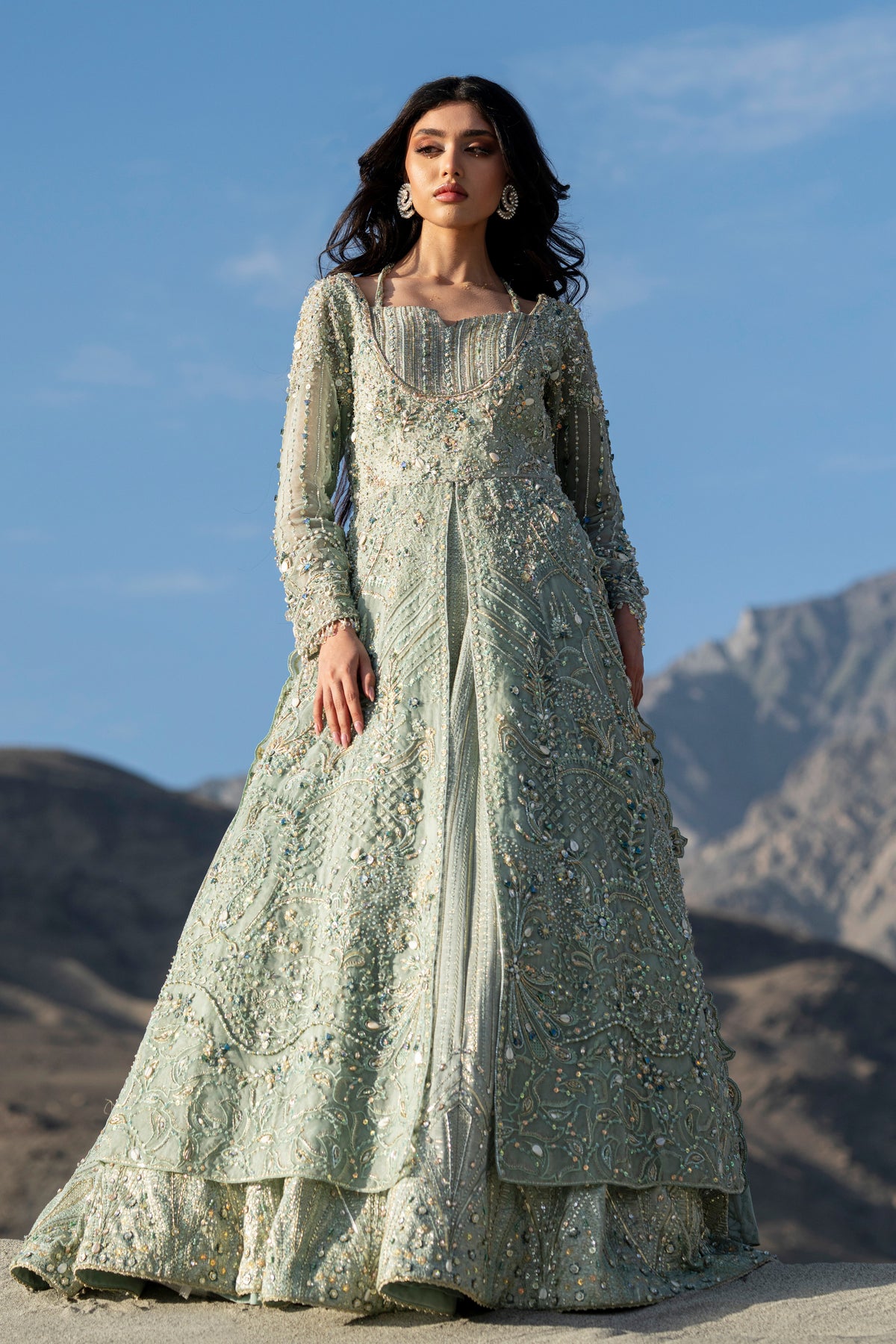
Onaifa uses Organza in its gown, where it helps the outer layer hold its form without looking too thick. The fabric supports the shape of the gown while the Shimmery Tissue lehenga underneath adds flow and movement.
Tissue and Chanar Tissue: Understanding Their Role in Bridal Volume
Tissue bridal fabric can help create volume, shape, and a soft shine, making it useful for fuller bridal skirts and layered designs. A Chanar Tissue bridal outfit can also use the fabric where the design needs shape with a light, polished surface. In both cases, the fabric helps build a fuller bridal look without depending only on heavy layers.
Pure Tissue and Shimmery Tissue are not interchangeable layers
|
Fabric |
Main Role |
Look & Feel |
Best Use in a Bridal Outfit |
|
Pure Tissue |
Helps create shape and controlled volume |
Smooth, refined shine |
Works well in fuller skirts, structured layers, and areas where the outfit needs body |
|
Shimmery Tissue |
Adds light, glow, and soft movement |
More visible shine and shimmer |
Works well in flowing layers, lehengas, and parts of the outfit where extra light and movement are needed |
Supporting fabrics can change how the outer layer falls
The fabric underneath can change how an outer bridal layer holds its shape and falls. A firmer base can give bridal fabric support, while a lighter outer fabric can add softness and movement. This is why the inner and outer fabrics need to work together rather than being chosen separately.
How NAQSHI Combines Fabrics Across The Vow
Across The Vow, NAQSHI combines fabrics according to the shape, support, movement, and finish each bridal design needs. A mixed fabric bridal outfit may use a firmer fabric to hold its form, a lighter layer for flow, and a sheer fabric to carry detailed embroidery or handwork. This careful mix allows each fabric to serve a clear purpose within the complete outfit.
Shamira, Kadeen, Onaifa and Haneen show four different fabric systems
The Vow fabric combinations change from one outfit to another because each design needs a different balance of shape, flow, shine, and support. These four outfits show how NAQSHI selects fabrics for a clear purpose rather than using the same fabric mix across the collection.
Shamira:
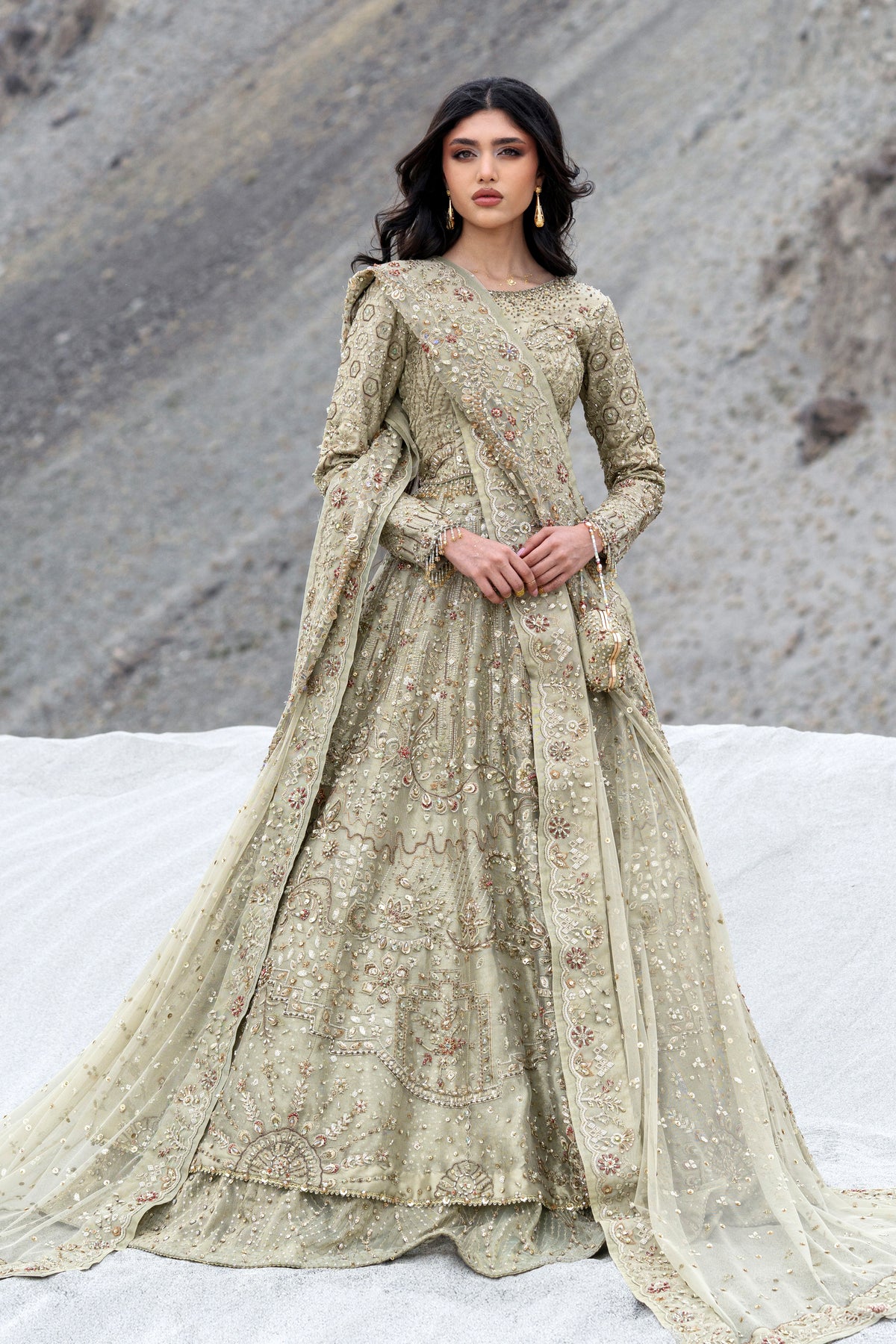
Shamira combines Tissue in the choli with Pure Tissue in the layered lehenga. This pairing helps the fitted upper part keep a defined look while the lehenga builds fuller bridal volume and movement.
Kadeen
Kadeen combines Organza with Chanar Tissue in its choli-lehenga design. Organza helps create a clear, structured shape, while Chanar Tissue supports the fuller bridal form and adds a light surface shine.
Onaifa
Onaifa pairs an Organza gown with a Shimmery Tissue lehenga. The Organza gives the outer gown shape, while Shimmery Tissue adds shine and movement underneath. This combination shows how different layers can work together without looking visually heavy.
Haneen
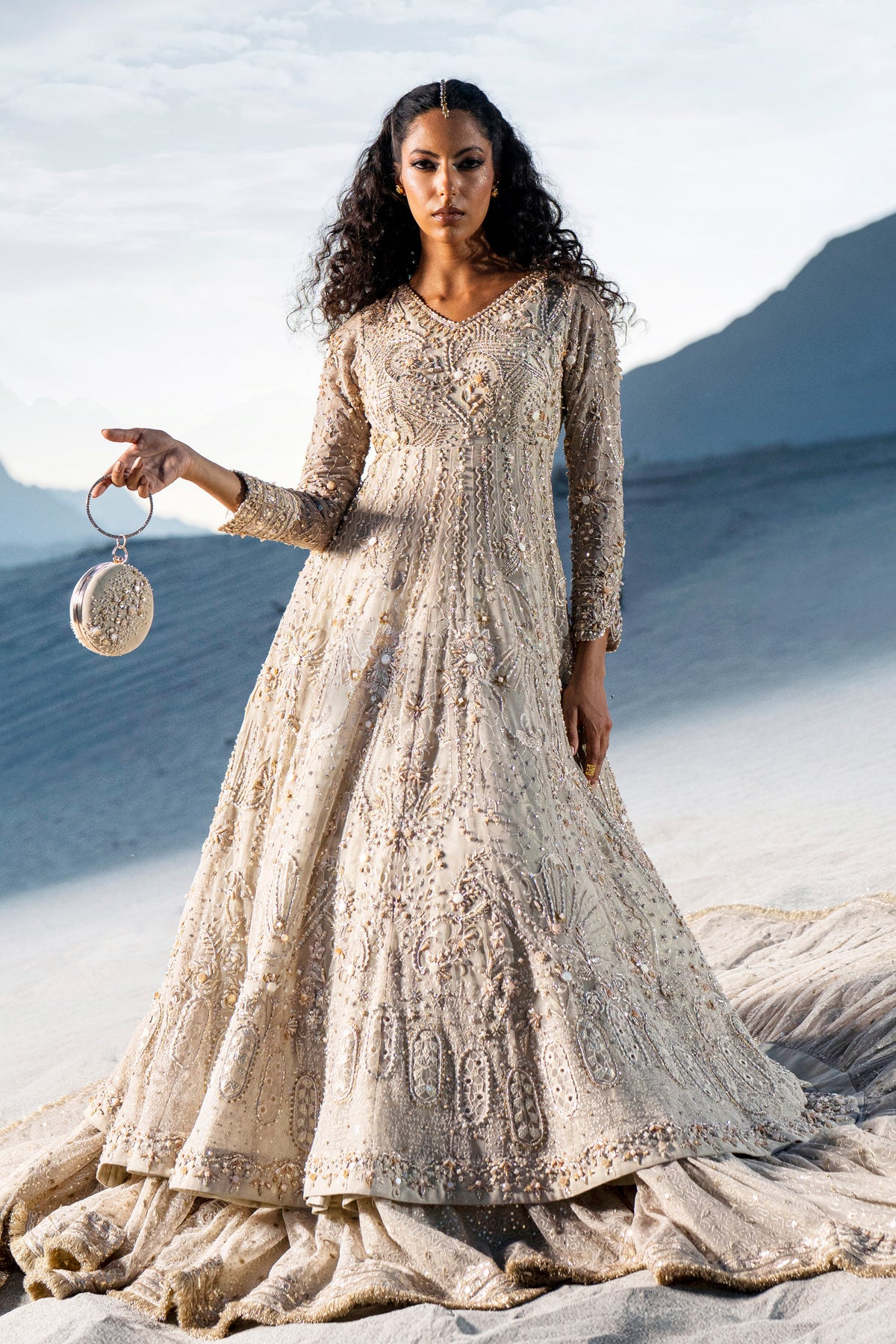
Haneen combines Tissue with PK Raw Silk to balance the outer bridal finish with support underneath. Tissue brings shine and presence, while PK Raw Silk helps the outfit hold its shape and gives the outer layer a smoother fall.
Together, these examples help readers understand layered bridal fabrics and explore The Vow by NAQSHI through the role each fabric plays in the finished outfit.
Choosing Fabric by Function Rather Than Fabric Name Alone
When choosing bridal fabric, the fabric name alone does not explain how it will work in an outfit. It is more useful to look at what the fabric needs to do, such as adding shape, creating flow, giving support, or forming a light outer layer. This approach helps explain why one bridal outfit may need several fabrics working together.
Evaluate the complete fabric combination before evaluating one layer
A practical bridal fabric selection starts by looking at the complete outfit. First, check what the outer layer adds, then consider the inner fabric for support, the skirt for shape and movement, and the dupatta for its fall. Finally, see how well these fabrics carry embroidery and handwork together. This complete view gives a clearer understanding of the outfit than judging one fabric alone and can also help when you Explore NAQSHI Wedding Edition.
Frequently Asked Questions About Bridal Fabrics
Which bridal fabric creates the most structured look?
Organza is a useful choice when a bridal design needs more shape and hold without looking too heavy. However, the final structure also depends on the inner fabric, layers, and overall design.
Can several bridal fabrics be used in one outfit?
Yes. A bridal outfit can combine fabrics such as Net, Organza, Tissue, Chanar Tissue, and PK Raw Silk. Each fabric can serve a different purpose, such as adding shape, support, movement, shine, or a light outer layer.
Why are inner fabrics important in bridal outfits?
Inner fabrics provide coverage and support to the outer layers. They can also affect how the outfit holds its shape, how the outer fabric falls, and how comfortable the complete design feels.
What is Net used for in bridal outfits?
Net works well for sheer layers, overlays, maxis, and dupattas. Its light surface also allows embroidery, sequins, and handwork to remain clearly visible.
What is the difference between Net and Organza in bridal wear?
Net is softer and more open, making it useful for light, sheer layers. Organza has a crisper feel and offers more shape, so it works well when a bridal design needs added structure.
Why are Tissue fabrics used in bridal lehengas?
Tissue can add volume, movement, and a soft shine to a bridal lehenga. Depending on the type of Tissue and the layers used with it, the fabric can help create a fuller bridal shape.
How does NAQSHI combine fabrics in The Vow?
NAQSHI combines fabrics according to the role each part of the outfit needs. Across The Vow, fabrics such as Net, Organza, Tissue, Chanar Tissue, Shimmery Tissue, and PK Raw Silk work together to balance shape, support, movement, layering, and finish.


