

How Layered Bridal Fabrics Create Flare & Movement in The Vow | NAQSHI
The movement of a bridal outfit does not come from using more fabric alone. In The Vow Bridal Collection, layered bridal fabrics work together to create flare, shape, and a smooth fall as the outfit moves. The outer layer gives the visible flow, while the layers underneath add support and help the silhouette hold its shape. Gathers, fabric weight, and the way each layer sits over the next also affect how wide the outfit opens while walking or turning. This careful balance allows a bridal look to feel full without making the finished shape look heavy.
Bridal Volume Starts Beneath the Visible Surface:
A full bridal look depends on more than the fabric seen on top. Bridal dress layering builds volume from underneath, where supporting layers, gathers, and fabric placement help control the final shape. In The Vow, these elements work together so the outer fabric can open naturally while walking or turning. This careful layered bridal shape gives the outfit fullness and movement without simply adding more fabric, To understand what each material contributes within these layers, explore The Vow bridal fabric guide for Net, Organza, Tissue, Chanar Tissue, and supporting fabric combinations.
Each layer can contribute structure, width or movement:
Each fabric layer can play a different part in creating wedding outfit volume. A firmer lower layer can support the shape and add width, while a lighter upper layer can move more freely as the outfit flows. Gathers can add further fullness where needed. When these layers work together, the bridal outfit can hold its shape while still moving naturally during walking and turning.
Shamira Shows How Two Lehenga Layers Work Together:
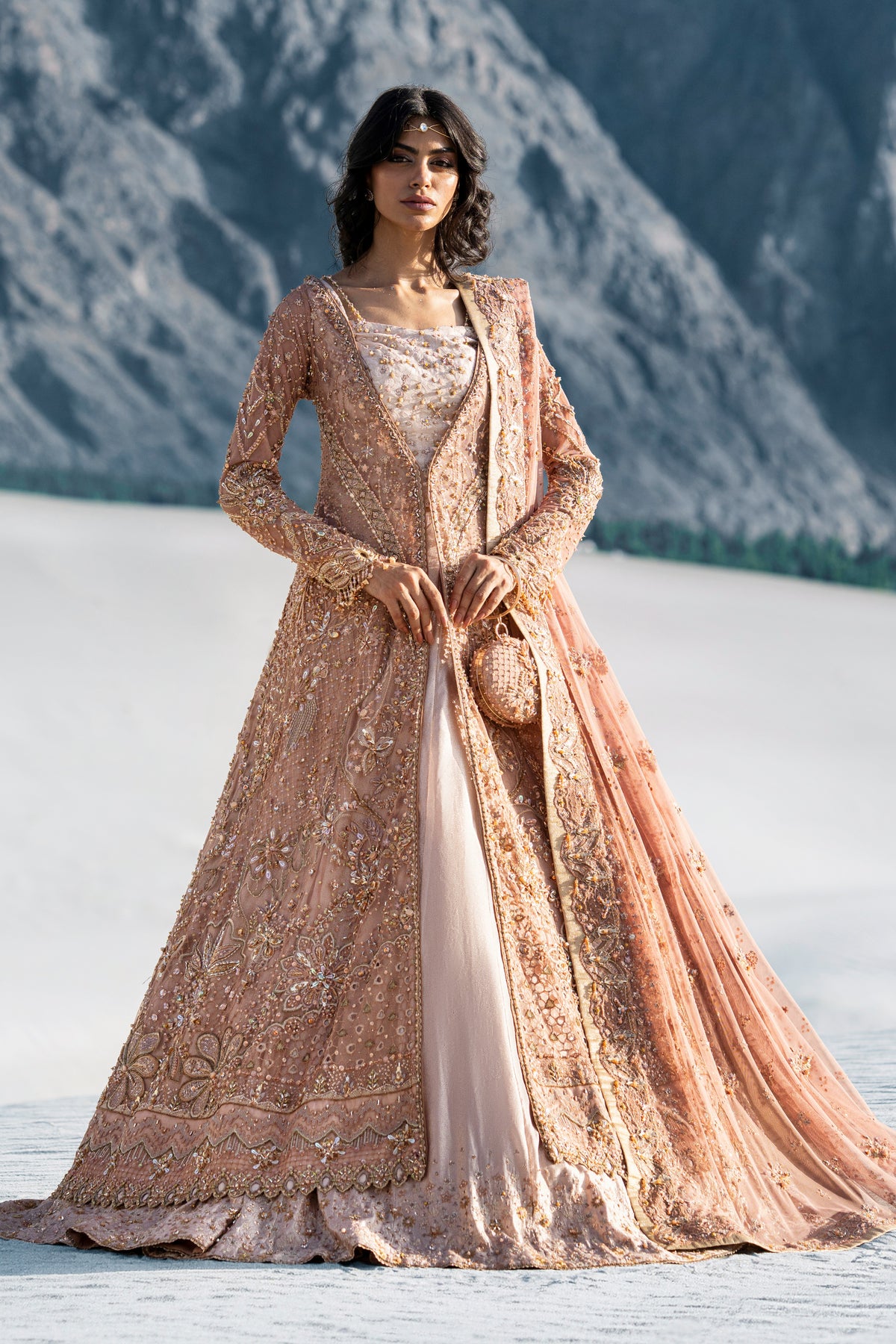
Shamira shows how two fabric layers can create a fuller bridal shape without relying on one heavy layer. Its layered lehenga fabric combines Pure Tissue layers that sit and move together, adding depth and a wider flow to the lehenga. As the upper layer moves, the layer beneath supports the overall shape, helping the lehenga open with more dimension while keeping its movement balanced.
The upper and lower layers perform different visual roles:
Two lehenga layers can create depth while keeping the overall shape light and balanced. The Pure Tissue upper layer adds visible flow and moves more freely during walking or turning. Underneath, the Tissue lower layer supports a fuller base and gives the silhouette more depth. Together, the layers create a clearer sense of flare while allowing the fabric to move naturally.
Haneen Builds Movement From the Lower Part of the Silhouette:
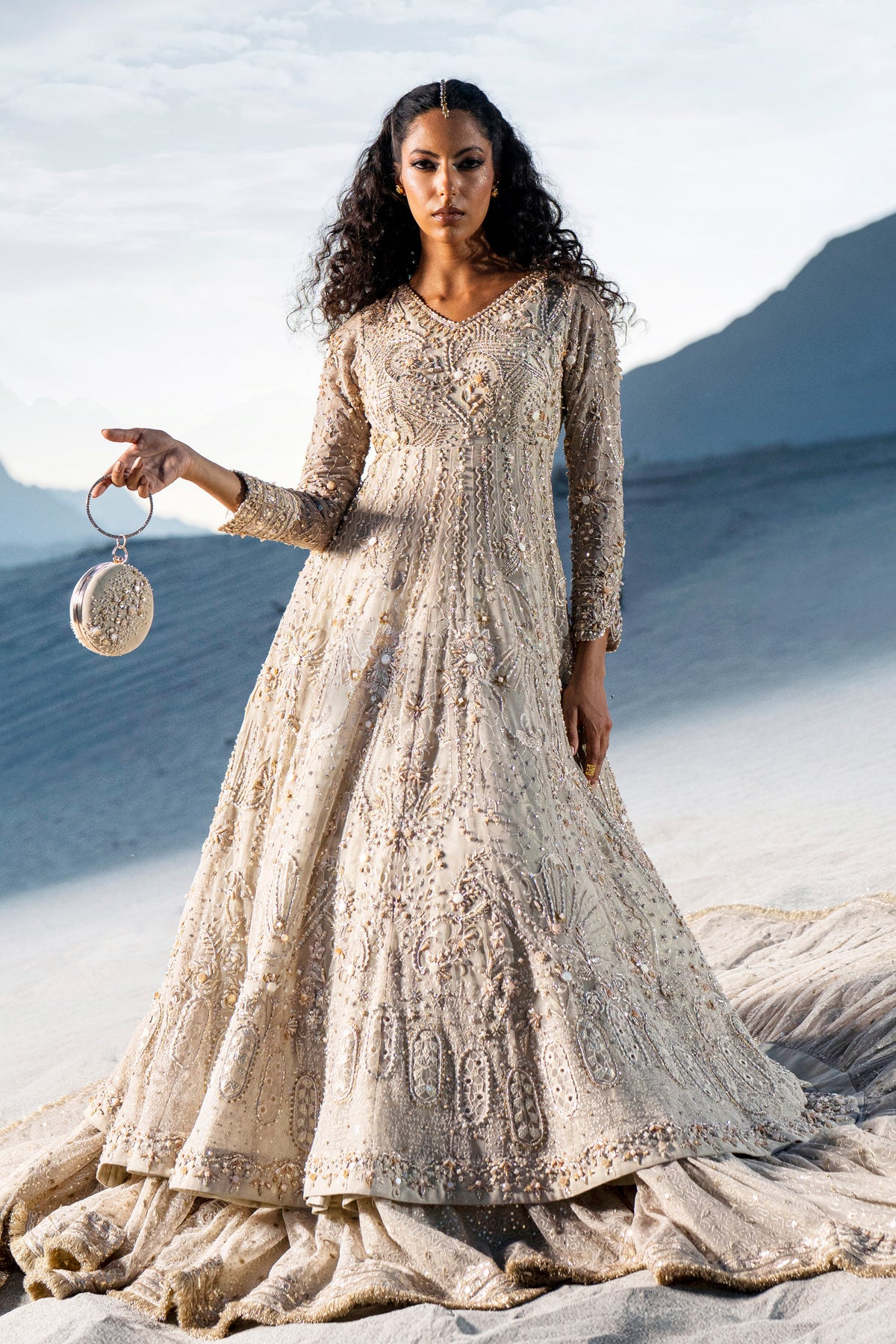
Haneen creates much of its movement through the lower part of the silhouette. The use of gathered Net adds width and fullness closer to the hem, allowing the lower section to open more naturally while walking or turning. This keeps the upper shape controlled while giving Haneen a softer and wider flow towards the bottom.
Gathering and support underneath the maxi create additional depth:
In Haneen, the gathered lower section works with PK Raw Silk support underneath to build more depth through the maxi. The supporting fabric helps the lower shape stay fuller, while the gathers allow the outer layer to spread and move with more freedom. Together, these details improve skirt movement and give the lower part a wider, more noticeable flow without adding unnecessary bulk.
Adifaah Creates Dimension Vertically Rather Than Through One Skirt Alone:
Adifaah creates depth through layers that fall from top to bottom rather than depending on one wide skirt. This gown layering allows the outer and inner parts to sit at different levels, giving the full silhouette more depth and visible movement. As the layers shift while walking, they create a flowing effect through the length of the outfit while keeping the overall shape balanced.
The gown-over-choli-and-lehenga arrangement creates visible depth:
The gown sits over the choli and lehenga, so each part remains a clear part of the full look. This layered bridal gown arrangement builds depth from top to bottom instead of creating all the volume through the lehenga alone. As the outer gown moves over the layers underneath, the different lengths and shapes become more visible and give the outfit a fuller, more detailed form.
Flare Is the Result of a System, Not One Measurement:
The width of the hem alone does not decide how much bridal dress flare an outfit will show. Layers, gathers, fabric weight, support underneath, and panelled flare all work together to shape the final result. How these parts connect also affects how the outfit opens while walking, turns with the body, and falls back into place. This is why two bridal outfits with a similar hem width can still have very different movement and volume. Flare is also only one part of the complete design; see how to choose a pastel bridal outfit by considering colour, fabric, silhouette, workmanship, dupatta, and finishing together.
Fabric behaviour, layers and silhouette need to work together:
A fabric may flow softly, hold its shape, or need support underneath, so the final flare depends on how all these parts work together. The same difference in fabric behaviour also affects the dupatta; see Net vs Organza bridal dupatta in The Vow for how softer and more structured fabrics change drape and framing.Layers can add depth, while gathers and the overall silhouette control where the outfit becomes fuller and how it moves. To understand these differences more clearly, see layered bridal designs from The Vow and compare NAQSHI bridal silhouettes to see how different fabric and layering choices shape the finished look.
Frequently Asked Questions:
Does adding more layers always create more bridal volume?
No. More layers do not always mean more volume. The final shape also depends on fabric weight, gathers, support underneath, and how the layers sit together.
What makes a layered lehenga move instead of looking stiff?
A layered lehenga moves well when the fabrics, weight, flare, and support work together. Lighter upper layers can move more freely, while the layers underneath help hold the overall shape.
Can a gown and lehenga be layered together?
Yes. A gown can sit over a choli and lehenga to create depth from top to bottom. This type of layering also allows different parts of the outfit to move separately.
How do fabric layers affect bridal dress flare?
Fabric layers can add width, depth, and movement to a bridal dress. The result depends on where the layers begin, how much fabric they use, and how each fabric falls.
Do gathers add volume to a bridal outfit?
Yes. Gathers bring extra fabric into a selected area, which can create more fullness and movement. Their placement helps decide where the silhouette becomes wider.
Why do two bridal outfits with similar flare move differently?
Fabric weight, layering, gathers, support, and overall shape can all change movement. This is why two outfits with similar width at the hem may fall and move very differently.
What is the purpose of a support layer under a bridal skirt?
A support layer helps the outer fabric hold its intended shape. Depending on the design, it can add fullness, support the lower section, and help the outer layers fall more clearly.


